|
|
|
|
 |
|
|
Editorial - April 2024
|
|
|
Cet éditorial a été initialement rédigé en français, cliquez ici pour la version française
|
|
|
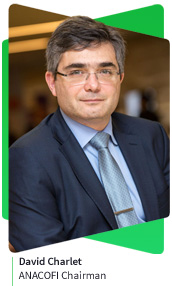 David Charlet, David Charlet,
ANACOFI Chairman
Financial education (literacy) of investors and training of advisors and intermediaries:
is the Retail Investment Strategy a revolution and where is it taking us?
The European education reform will soon be 35 years old and for almost 10 years, texts have imposed precise specific annual training requirements on certain professionals in our jobs.
The debate sometimes focused on the question of content, other times on the volume and of course, the questions of proof of monitoring or acquisition of skills very quickly occupied minds.
Certification or diploma and what information should appear on a monitoring certificate, are all questions which, in each Member State, had to be answered.
Although the monitoring methods were rapidly the subject of a shared analysis, the volumes and programs were more difficult to harmonize.
At the same time, with the complexity of offers and legal rules, scams or the mass dissemination of information, another necessity has emerged: the need to improve the level of understanding of consumers and savers. For them, as for professionals, the content, format and proof of acquired skills quickly became topics of debate and even regulations sometimes included within national plans.
In this context, the “Retail Investment Strategy” (RIS) now for the first time addresses both the training of professionals and the financial education of populations.
If (with regard to consumers and savers), we can regret the lack of ambition of the RIS, which simply decrees that States must make their best efforts, on the side of professionals, it decides and becomes of paramount interest, considering it is only a level 1 text, which will be supplemented by others, probably more precise.
It is not neutral that this omnibus text leads to IDD and MIFid each requiring 15 hours of annual training for approved professionals and certification in ESG (sustainability) matters.
This is all the less so since a revision of the Credit Directives will most likely follow, which also would address the constraints of professionals acting in these areas.
While the European Union affirmed the supremacy of diplomas 35 years ago, here it is highlighting certification.
While it asked Member States to demonstrate that their annual training system for their agreed professionals was adequate, it sets a framework based on volume and clearly refers to regulators and no longer to the authorities dedicated to education and training in general, the responsibility for defining content and modalities over time.
Even if in many states it was already a fact that regulators had taken control, today it is an element that will be engraved in hard law at the highest level.
Therefore, associating professionals to the decisions of regulators becomes an imperative necessity.
Failing this, not only will the normal functioning of a State, which takes into account its civil society, no longer be the rule in terms of training and education which will be mechanically impacted, but decisions might no longer be dictated by need and indeed more by the security constraint. The politician who wants adequacy but also investment and innovation, shall have to comply with what is perfectly normal for a police officer or regulator: avoiding accidents and tracking down dangerous behavior as defined in the elements of conformity, which moreover he is now helping to draft.
We are clearly seeing a shift in power towards the gendarme who is also very often a judge. The importance of the full, complete and assured place in its bodies, of the publics it supervises is therefore no longer to be seen as something to be avoided because it is fraught with conflicts of interest. It becomes an absolute necessity, helping to take into account the opinions of those on whom they will impose training and certifications.
In France, the so-called “co-regulation” system, if correctly applied, in compliance with the spirit of the law, can probably be adapted without a legal revolution.
But what about elsewhere?
In any case, those of our professionals who complained about the annual volume of their training obligations must now understand that the debate is closed. They will have to follow more training, these will be formatted, often certifying therefore with formal tests and the more certifications they display, the more these compulsory hours will add up.
Until the populations of the Union have reached a sufficient level of financial competence, this is the price at which we will be able to work. This is seen by our authorities and by many of us as a guarantee for the consumer, saver or investor who is our client.
|
|
|
|
|
|
|
David Charlet, is a graduate of the Universities of Paris I and Aix Marseille. He has taught and is yet lecturer in various Universities and Schools for more than 25 years.
Today president of CC&A Finance Patrimoine Formation, he is best known as president of the National Association of Financial Advisers (ANACOFI) since 2004. Member of the Board of the European Federation of Financial Advisers and Intermediaries (FECIF) since 2007 of which he was president from 2017 to May 2020. He is also a member of the Financial Sector Advisory Committee (CCSF) and the Strategic Committee of the National Financial Education Program (EDUCFI).
He was also a member of the National Council for Higher Education and Research (CNESER) and an administrator of ORIAS (French National register for Intermediaries).
He is the author of numerous articles, studies and several books.
As member of the FECIFs’ Board he mostly works on texts and concerns focused on Compliance, Tech, Financial and Insurance topics.
|
|
|
|
Share this editorial >>
|
|
|
|
|
|
Editorial - March 2024
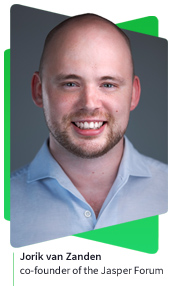 Jorik van Zanden, Jorik van Zanden,
co-founder of the Jasper Forum
The need for capital markets and proper advice
Why and how do we have pensions?
The provision of income in old age is one of the most precarious of all social benefits. At a macro level, how do we prevent our elders from falling into poverty once they are no longer working? At a micro level, how do we ensure that the income decline in...
>> CONTINUE READING
|
|
|
|
|
Editorial - February 2024
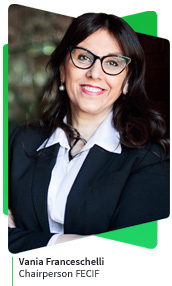 Vania Franceschelli Vania Franceschelli
Chairperson
Open finance and the role of financial advice
Financial advisors, by virtue of their function as connectors between financial markets and retail customers, are called upon to be ahead of the times and be ready to provide clients with the knowledge and skills necessary to allow them to make the most of the new...
>> CONTINUE READING
|
|
|
|
|
Editorial - January 2024
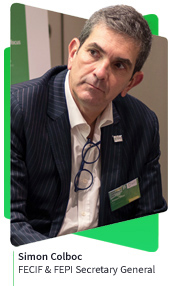 Simon Colboc Simon Colboc
FECIF & FEPI Secretary General
2024: the year ahead for Financial Advisors
As we settle down for a well-deserved new year break, now is a good time to reflect on the events of 2023 and what we expect in the coming year.
As we prepare to open the Champagne (or Cava, Sekt, Prosecco or whatever your favourite....
>> CONTINUE READING
|
|
|
Editorial - November 2023
 Martin Klein Martin Klein
FEICIF Deputy Chairman, VOTUM Chairman
European politicians must see cutting red tape as a core task
Harmful new regulation must be prevented - the Retail Investment Strategy is a warning sign for this!
The unchecked increase in bureaucratic burdens is weakening...
>> CONTINUE READING
|
|
|
Editorial - September 2023
 Josep Soler-Albertí Josep Soler-Albertí
EFPA Spain’s Executive Director
FECIF’s Board Director
RIS: let’s make the skills matter.
After many consultations and reports within the framework of the Retail Investment Strategy (RIS), the European Commission (EC) published in May the proposal for an “Omnibus Directive” as regards the retail investor protection rules, which modifies five main financial...
>> CONTINUE READING
|
|
|
Editorial - July 2023
 Frank Rottenbacher Frank Rottenbacher
AfW Member of the Board
Overview of the amendments proposed on MiFID and MiFIR
At the end of 2021, the European Commission presented a Regulation proposal (2021/0385) to amend the MIFIR Regulation (600/2014 EU) aiming at improving the transparency of market data, the elimination of obstacles to the emergence of a consolidated...
>> CONTINUE READING
|
|
|
Editorial - May 2023
 Me Yves Nidegger Me Yves Nidegger
Lawyer, Member of the Swiss Parliament,
Legal Advisor of GSCGI-SAIFA
Welcome to the age of sanctions
It does not seem impossible to me at all that, after the Stone Age and the Iron Age, the archaeologists of the future will one day designate the era we are entering today as the Age of Sanctions...
>> CONTINUE READING
|
|
|
Editorial - March 2023
Josep Soler-Albertí
EFPA Spain’s Executive Director
FECIF’s Board Director
Access to forecasts and information asymmetry in financial advice
The information asymmetry between suppliers and customers in the investment product markets, as in others, is to blame for its imperfect functioning. The availability of analysis and forecasts for suppliers and not for clients is...
>> CONTINUE READING
|
|
|
Editorial - January 2023
David Charlet
ANACOFI Chairman
A crazy 2022 – what awaits in 2023?
War, financial markets, real estate, revision of European texts... between a planned return to normal life and the abnormality of an unthinkable and yet present war... let’s have a look back at a crazy year for our professions and for the world. What next could we expect for 2023...
>> CONTINUE READING
|
|
|
Editorial - November 20221
Simon Colboc
FEPI Secretary General
Assets for retirement in Europe: the case of the missing €10tn
High-level analyses of demographic evolution in Europe and the state of local unfunded pension schemes come to the alarming conclusion that there is €10tn missing from the system, if we are to have a level of funded pensions comparable with US, UK or Scandinavian markets...
>> CONTINUE READING
|
|
|
Editorial - September 2022
 Vincent Derudder Vincent Derudder
Honorary Chairman & Board member
European e-commerce continues to grow
Despite consumer caution about spending – because of the war in Ukraine, uncontrolled inflation, disruption of global chain supplies and a general sense of uncertainty leading to pre-pandemic level growth – e-commerce has continued to grow in 2021 in Europe and it...
>> CONTINUE READING
|
|
|
Editorial - July 2022
Vania Franceschelli
Deputy Chairwoman
The European Commission project for Open Finance
In 2020, the Commission identified the promotion of data-driven finance as one of the priorities of its digital finance strategy. On 25 November 2021, the Commission proposed legislative proposals on the Single European Access Point (ESAP) as part of the Capital Markets Union...
>> CONTINUE READING
|
|
|
Editorial - May 2022
 Garry Heath Garry Heath
Member of the FECIF board
Major insights into the impact of regulation
Every two years, the UK’s adviser trade association, The Impartial Financial Advisers Association, creates a report on the availability of professional advice to UK consumers. This report is created from desktop research via already published information combined with a...
>> CONTINUE READING
|
|
|
Editorial - March 2022
Vania Franceschelli
Deputy Chairwoman
The new European digital finance package
The EU Digital Finance Package consists of a series of initiatives that will be implemented by 2024, aimed at encouraging the development of the European Union and a competitive financial sector, intended to reap the benefits of digital finance in terms of...
>> CONTINUE READING
|
|
|
Editorial - January 2022
Josep Soler-Albertí
Chairman, FECIF Advisory Committee and CEO, EFPA Spain
Thirteen clues to investment in 2022
We could cite less than 13, or even more clues, but it must be said that, contrary to what some people think, investment will not be driven by good or bad luck, but by a set of economic and political forces...
>> CONTINUE READING
|
|
|
Editorial - November 2021
 Jim Henning Jim Henning
Principal Investment Consultant, Dynamic Planner
Sustainability: what is the role of the financial markets?
How are we able to satisfy the needs of the present without compromising the ability of future generations to meet their own needs?
Financial institutions such as...
>> CONTINUE READING
|
|
|
Editorial - September 2021
David Charlet
ANACOFI Chairman
Economic recovery or stall?
Return to normal life or Covid episode 4 or 5? Will Europe and the rest of the world experience the same “back to school”? What role for the companies and intermediaries that we represent?
We all tried to make the month of August as restful as possible, as disconnected from Covid as we...
>> CONTINUE READING
|
|
|
Editorial - July 2021
Vania Franceschelli
Deputy Chairwoman
COVID-19 highlights the limitations of Money Market Funds
The pandemic emergency outbreak, in March 2020, shed a light on some vulnerabilities of money market funds, which have experienced huge outflows and problems in selling their assets to meet investors’ demands. Fortunately...
>> CONTINUE READING
|
|
|
Editorial - May 2021
Martin Klein
Chairman FECIF & VOTUM
“Spirit of optimism in Europe”
There is a spirit of optimism in the air. Across Europe. Even though all 27 EU member states are in the midst of the final phase of fighting the pandemic and the infection figures do not yet allow a final signal of relief, rising vaccination rates finally promise a timely ray of hope...
>> CONTINUE READING
|
|
|
Editorial - March 2021
Simon Colboc
FEPI Secretary General
Pension reform in Europe: make way for the 4th Pillar?
A wide-ranging study on retirement across Europe conducted in 2020 by the FECIF European Pensions Institute (FEPI) shows that current pension reforms, however ambitious, are far from enough to address the scale of the issue.
>> CONTINUE READING
|
|
|
Editorial - January 2021
Simon Colboc
FEPI Secretary General
The Savings Revolution
Household financial savings are making headlines today. This is hardly surprising, given that everything seems to revolve around these savings, from the financing of pensions to the development of a more sustainable economy, the very survival of old Europe and our...
>> CONTINUE READING
|
|
|
Editorial - November 2020
Vincent J.Derudder
FECIF Advisory Committee Member & Honorary Chairman
Building Partnerships with European Professional Associations
In 2000, under the presidency of Portugal, the “strategy of Lisbon” was launched to promote a European knowledge-based and competitive economy, in the paradigm of the competitive...
>> CONTINUE READING
|
|
|
Editorial - September 2020
 Vania Franceschelli Vania Franceschelli
Deputy Chairwoman
The importance of fighting for gender equality in the financial advice industry
Gender equality is a key point in the 2030 Agenda for Sustainable Development adopted at the United Nations Sustainable Development Summit on 25th September 2015. The plan set by the Agenda is formed by 17 goals that aim to...
>> CONTINUE READING
|
|
|
Editorial - July 2020
 Edden Kift Edden Kift
PortfolioMetrix business development team
5 ways advisers have remained client focused during COVID-19
The global pandemic has necessitated a rethink by many advisers about how they should go about their business. While some have continued to function relatively easily and effectively, for others...
>> CONTINUE READING
|
|
|
Editorial - May 2020
Vania Franceschelli
Deputy Chairwoman
Millennials – a generation that needs to be heard
Financial advisors have to take into account that their role needs to be sustainable in the long term. A great role in this process is played by the ability to listen and study the habits and needs of new generations. A focus on the younger portion of the population will enhance...
>> CONTINUE READING
|
|
|
Editorial - March 2020
 Josep Soler-Albertí Josep Soler-Albertí
CEO, IEF & Executive director, EFPA Spain
Financial advice and the cognitive biases of pensions
When Richard Thaler, after winning the 2017 Nobel Prize in Economics for his work on the impact of irrationality and emotions in economic decisions, responded to journalists that he would spend the amount of the prize (one million euros) “irrationally”, he undoubtedly...
>> CONTINUE READING
|
|
|
Editorial - January 2020
 Paul Stanfield Paul Stanfield
FECIF Secretary General
Does financial advice provide value? It sure does!
A recent study proved that:
• Professional financial advice can and does significantly enhance clients’ wealth.
• That this benefit occurs even in a commission environment.
• And it is most valuable for less wealthy clients.
Quantifying the value of advice has always been somewhat...
>> CONTINUE READING
|
|
|
Editorial - October 2019
 Jiří Šindelář Jiří Šindelář
Broker Consulting, a.s.
former Deputy Chairman of FECIF
Yet another regulatory myth explained
Nobody in the financial industry could have missed how notable the attention has been in all recent regulations paid to the conflict of interest and its mitigation. All those MiFIDs, IDDs, MCDs and other Directives, have substantial parts dedicated to so called “inducements”. This is...
>> CONTINUE READING
|
|
|
Editorial - August 2019
 David Charlet David Charlet
FECIF & ANACOFI Chairman
A new EU or same old, same old?
Will this summer see a new Europe or the return to the “good old continent"? What are the challenges for our profession and our clients?
It will not have been easy but finally, Ursula von der Leyen was...
>> CONTINUE READING
|
|
|
Editorial - June 2019
 Olivia Geldenhuys Olivia Geldenhuys
PortfolioMetrix Head of Support, Europe
Trust – the cornerstone of financial advice
There’s a quote that says, “Trust takes years to build, seconds to break, and forever to repair”. This is nowhere truer than in the financial world, where a person’s quality of life relies on decisions made by the experts in whom they place their trust. As a financial adviser, your ability to build trust...
>> CONTINUE READING
|
|
|
Editorial - April 2019
 Vincent J.Derudder Vincent J.Derudder
FECIF Advisory Committee Member & Honorary Chairman
Happy Birthday FECIF! And here’s to real consumer protection
On the 30th June this year, FECIF will celebrate its 20th anniversary!
The Fédération Européenne des Conseils et Intermédiaires Financiers Aisbl (FECIF) was created on 30th June 1999 by a Royal Decree of the Belgian Ministry of Justice at the request of ...
>> CONTINUE READING
|
|
|
Editorial - February 2019
 Vania Franceschelli Vania Franceschelli
Member of Fecif Board of Directors & Foreign Affairs, Anasf
ESG – growing in importance for everyone!
From a recent survey carried out by a famous global investment company, 46% of investors want to focus more on sustainability criteria for their portfolio choice and as a result 93% of fund managers cannot fail to take this into account in monitoring the company in which...
>> CONTINUE READING
|
|
|
Editorial - December 2018
 Jiří Šindelář Jiří Šindelář
Deputy Chairman FECIF
Unique Research: In the first two years of the FECIF Expertise initiative, what have we learned so far?
It has been two years, since FECIF started its Expertise initiative, a huge push for greater and better knowledge about the pan-European financial advice and intermediation sector. Since I have been honoured to chair the whole project among...
>> CONTINUE READING
|
|
|
Editorial - October 2018
 Daphne Foulkes, Daphne Foulkes,
Board Member of FECIF, Chairperson of FEPI, and Partner at The Spectrum IFA Group
The Insurance Distribution Directive – Are you ready?
Since 2005, insurance intermediaries have operated under the rules of Directive (2002/92/EC) – the Insurance Mediation Directive (IMD). This has now been replaced by the EU Directive 2016/97 – the Insurance Distribution Directive (IDD)...
>> CONTINUE READING
|
|
|
Editorial - August 2018
Vincent J.Derudder
Honorary Chairman
Crisis in Europe?
Europe is going through a very serious crisis and so is the EU financial services industry.
To focus on some basic indicators, the world today is made up of a homogenous block of four dominant countries (the US, Russia, India and China) representing 4 billion people and..
>> CONTINUE READING
|
|
|
Editorial - June 2018
Jiří Šindelář
Deputy Chairman FECIF
Did we become hostages to ever-increasing regulation?
According to most common sources, Stockholm syndrome is a type of psychological bond between hostage and their hijacker, when the former develops emotional ties to a person that beats, abuses or generally hurts him or her. Plainly sad, it is....
>> CONTINUE READING
|
|
|
Editorial - April 2018
Vania Franceschelli
Member of Fecif Board of Directors & Foreign Affairs, Anasf
IDD and MiFID II. Beloved sisters or competing friends?
Time has come. On 19 March the amendment postponing the application date of directive 2016/97 (Insurance Distribution Directive - IDD) has been published in the Official Journal of the European Union. By 1 July Member States shall thus adopt and publish all the laws...
>> CONTINUE READING
|
|
|
Editorial - February 2018
Daphne Foulkes,
Partner, The Spectrum IFA Group and FECIF Board Member
Will your pension sustain you through retirement?
It is widely known that Europe’s ageing population is a problem for EU Member States. Quite simply, people are living longer and this impacts on the sustainability of State pension systems, referred to as...
>> CONTINUE READING
|
|
|
Editorial - December 2017
David Charlet
FECIF & ANACOFI Chairman
Beyond robo-advisors, what might the future be for following generations?
The media seems to have only one word to say at present, when explaining our future: robots! Is it time for robo-advisors to replace our human members?
If you take a look to some of our previous editorials, written by our Secretary General or some of our members, you will...
>> CONTINUE READING
|
|
|
Editorial - October 2017
 Dhruv Mehta, Dhruv Mehta,
Chairman of the FOUNDATION OF INDEPENDENT FINANCIAL ADVISORS
Evolution and Regulatory Challenges – Lessons from India
The Foundation of Independent Financial Advisors (FIFA) is a body representing Advisors and Distributors of Mutual Funds in India, commonly known as Independent Financial Advisors (IFAs).
During my recent meeting with FECIF I realised the common...
>> CONTINUE READING
|
|
|
Editorial - August 2017
Jiří Šindelář
Member of FECIF board of directors
How Vox Populi in Europe is (sometimes) being portrayed
Two weeks ago, my home city of Prague hosted an important event: the Joint ESAs’ Consumer Protection Day. This is an event that forms an important part of the regulation agenda and according to its organisers should “discuss issues related to consumer...
>> CONTINUE READING
|
|
|
Editorial - June 2017
David Charlet
FECIF & ANACOFI Chairman
Europe as financial advisers see it
A long time ago, the European Union used to be a place for the production of coal and steel. Nowadays, it seems to be a global Union far more engaged than the US with our jobs and other matters. Consider: in the US no would find “passports” for...
>> CONTINUE READING
|
|
|
Editorial - April 2017
 Paul Stanfield Paul Stanfield
Chief Executive at FEIFA / FECIF Secretary General
Are you really ready for the future?
“The other day Ray was having a conversation with his 13 year old son and they ended up on a topic / issue that they needed more info on – his response was to “Google” it, his son chose to “YouTube” it. He realised at that point that they had different ways of looking for information, learning answers, and engaging with...
>> CONTINUE READING
|
|
|
Editorial - February 2017
Paul Stanfield
Chief Executive at FEIFA / FECIF Secretary General
Transparency not commission is the real key for 2017 and beyond
A number of industry commentators keep stating that it’s now all about the end of commission on a global basis – but is it, really? We all know of the switch to fees in the UK, and also a small number of other locations around the world, but certain other jurisdictions have also been quoted as moving in that direction, only for regulators in...
>> CONTINUE READING
|
|
|
Editorial - December 2016
 Paul Resnik Paul Resnik
Cofounder & Director of Finametrica
Robo 3.0
Robo advisors are, beyond any doubt, hugely disruptive to the financial advice market. But not in the way that many people expect.
Many commentators and analysts are still focused on trying to pick the ‘Uber moment’, when robos wipe out the old world by...
>> CONTINUE READING
|
|
|
Editorial - October 2016
 Schroders Investment Management Schroders Investment Management
Over confident investors and the help they need
Investors thinking they know more than they do about investing could cause problems when it comes to their future financial planning.
Investors could be missing out on billions of Euros in investment returns by over estimating their own ability to understand...
>> CONTINUE READING
|
|
|
Editorial - August 2016
Paul Stanfield
Chief Executive at FEIFA / FECIF Secretary General
Robo-advice financially unviable
The above was the main content of an article in a financial industry publication last month. This was based on a recent study, which found that UK robo-advisers are structured in such a way that they will lose money and “most will go bust before acquiring the sizeable assets under management needed to survive”.
Food for thought, not least for regulators – many of whom seem...
>> CONTINUE READING
|
|
|
Editorial - June 2016
Paul Stanfield
Chief Executive at FEIFA / FECIF Secretary General
Do consumers and advisers finally have the same goals?
Over the last year or two it has struck me that the increasing complexity of regulation is not only being seen in a negative light by the financial advisory and intermediary market – there are also growing concerns being expressed by consumers and, in particular, consumer groups, that this is having a negative impact on the public at large.
>> CONTINUE READING
|
|
|
Editorial - April 2016
Paul Stanfield
Chief Executive at FEIFA / FECIF Secretary General
Interesting implications for the rest of Europe and beyond?
Last month saw the publication of the results for the UK’s Financial Advice and Market Review (FAMR). Whilst this might not have had much in the way of impact elsewhere across Europe, it perhaps should have done...
>> CONTINUE READING
|
|
|
Editorial - February 2016
Jiří Šindelář
Member of FECIF board of directors
The Brussels’ Circle of Overregulation
Even though the European Union was given a series of warnings regarding its effort to regulate anything and everything, it did not slow down. Despite proclamations about “changing the course” and “smart regulation”, from November to December...
>> CONTINUE READING
|
|
|
Editorial - December 2015
Paul Stanfield
Chief Executive at FEIFA / FECIF Secretary General
Robo-advice: fact and fiction
I have lost count of the amount of articles about so-called robo-advice. It certainly is the “flavour of the month” and, if we believe all that we hear, will soon become the most important element in the delivery of financial services. I have some strong views on this….
>> CONTINUE READING
|
|
|
Editorial - October 2015
Paul Stanfield
Chief Executive at FEIFA / FECIF Secretary General
Where now for commissions?
European regulators eventually “stood back from the brink” and within the agreed text of both MiFID 2 and the IDD (Insurance Distribution Directive) fell short of a complete commission ban – a ban that many thought might well happen as little as 12 months ago!...
>> CONTINUE READING
|
|
|
Editorial - August 2015
Paul Stanfield
Chief Executive at FEIFA / FECIF Secretary General
The importance of effective representation
The compromise text for the Insurance Distribution Directive (IDD) was recently finalised and it was very pleasing to see that the vast majority of the proposals put forward by FECIF in the recent consultation period have been heeded.
>> CONTINUE READING
|
|
|
Editorial - June 2015
 Garry Heath Garry Heath
Director General Libertatem
Garry Heath announced the launch of Libertatem last month, a new trade association set up to represent all types of financial advisers based in the UK. His thoughts and plans are outlined below – they have great relevance to the rest of Europe.
Over the last decade the industry has lost sight ...
>> CONTINUE READING
|
|
|
Editorial - April 2015
Paul Stanfield
Chief Executive at FEIFA / FECIF Secretary General
10 reasons to use a Financial Adviser
Many people have the perception that only the very wealthy need financial advice. However, the facts are that anyone can potentially benefit from such advice...
>> CONTINUE READING
|
|
|
Editorial - February 2015
Garry Heath
Journalist, The Heath Report assured
IFAs: Support trade associations or jeopordise independence
The last month has been one of travel. Firstly a symposium to address in Toronto and then it was Brussels and the FECIF conference...
>> CONTINUE READING
|
|
|
Editorial - September 2014
Paul Stanfield
Chief Executive at FEIFA / FECIF Secretary General
Our immediate goals
I was very pleased to be elected as the new Secretary General of FECIF at our last Board meeting, it is very much an honour to represent a body that supports and promotes the adviser...
>> CONTINUE READING
|
|
|
|
|
Editorial - December 2023
Josep Soler-Albertí
EFPA Spain’s Executive Director
FECIF’s Board Director
The continuous and mostly unnoticed European impoverishmen
Anyone who has had the opportunity to recently travel around the United States will have easily noticed a widespread increase in prices, particularly perceived by those whose reference currency is...
>> CONTINUE READING
|
|
|
Editorial - October 2023
Simon Colboc
FEPI Secretary General
Pension Savings meet green transition: could non-listed assets help solve Europe’s pension gap?
European policymakers are pushing hard to develop Europe’s financial markets, at a time when it seems our stock-markets are losing the fight against their US competitors (How the US is crushing Europe’s...
>> CONTINUE READING
|
|
|
Editorial - August 2023
Vania Franceschelli
Chairperson
Increasing retail investors participation in capital markets
One of the points within the agenda of the European Commission focuses on increasing retail investors’ participation in the capital markets.
To this end, Mrs. Mairead McGuinness, the European Commissioner for Financial...
>> CONTINUE READING
|
|
|
Editorial - June 2023
 Jiří Šindelář Jiří Šindelář
Former FECIF deputy chairman
Chairman of the Czech Association of Financial Advisers and Intermediaries (ČASF)
For the people!
The recently published European Commission statement on the Retail Investment Strategy (RIS) sparked relief among many financial professionals. The huge social engineering project of a ban on investment commissions was...
>> CONTINUE READING
|
|
|
Editorial - April 2023
Vincent Derudder
Honorary Chairman & Board member
Crisis in Europe?
The European Union is going through a very serious crisis, and so is the EU financial services industry, because of the war launched by the Russians in Ukraine, plus the tensions in the markets, and so many areas of the world.
Europe encompasses about 550 million people and the rest of...
>> CONTINUE READING
|
|
|
Editorial - February 2023
 Paul Stanfield Paul Stanfield
FECIF Secretary General
Perhaps we get what we deserve?
Back in 2015, a newly-launched UK trade association raised concerns of serious importance that were – and have been - extremely important in other countries too. I wrote about those at that time and many are still issues today; some are even greater problems now, or likely to become...
>> CONTINUE READING
|
|
|
Editorial - December 2022
Vania Franceschelli
Deputy Chairwoman
Overview of the amendments proposed on MiFID and MiFIR
At the end of 2021, the European Commission presented a Regulation proposal (2021/0385) to amend the MIFIR Regulation (600/2014 EU) aiming at improving the transparency of market data, the elimination of obstacles to the emergence of a consolidated...
>> CONTINUE READING
|
|
|
Editorial - October 20221
 Louis Williams Louis Williams
Head of Psychology & Behavioural Insights at Dynamic Planner
Attitude to financial risk across Europe
Attitude to financial risk across Europe
As we begin to witness a shift in saving intentions and behaviours by households across Europe, it is somewhat surprising that a lack of research exists comparing attitudes to risk. Arguably, understanding...
>> CONTINUE READING
|
|
|
Editorial - August 2022
 Johannes Muschik Johannes Muschik
FECIF Board Member
Less insurance, more security
The Member States of the European Union require insurance intermediaries to have professional liability insurance of at least EUR 1,250,000 for each individual claim and EUR 1,850,000 for all claims in a year. This is what the EU Insurance Distribution Directive (IDD) requires. The aim of the...
>> CONTINUE READING
|
|
|
Editorial - June 2022
Paul Stanfield
FECIF Secretary General
The next 10 years
I recently came across an article that I wrote in December 2015 and immediately wondered whether what I had written had come to pass, in any way, shape or form. Without wanting to sound immodest, my predictions appear to have been fairly accurate and in a shorter timescale – but...
>> CONTINUE READING
|
|
|
Editorial - April 2022
 Fernando Zunzunegui Fernando Zunzunegui
Member of the Advisory Committee
Knowledge gives us autonomy
This statement, that could easily be agreed by anyone, is even more true when we are talking about professionals in any field. Professionals are defined precisely for their technical capacity and their independence of criteria, and these skills depend on their knowledge...
>> CONTINUE READING
|
|
|
Editorial - February 2022
Vania Franceschelli
Deputy Chairwoman
The need to regulate the robo adviser industry by focusing on investor protection
Robo advisers are attracting growing interest in the financial arena, but at the same time there is a lack of awareness and knowledge on how to approach this world. As the use of these services could rise in...
>> CONTINUE READING
|
|
|
Editorial - December 2021
Simon Colboc
FEPI Secretary General
A shift for long-term savings in Europe?
A recent study by CMI Strategies has revealed interesting trends about long-term savings in France and in Europe.
There is a growing discrepancy in Europe between the need to increase long-term savings (not least for retirement) and...
>> CONTINUE READING
|
|
|
Editorial - October 2021
Vania Franceschelli
Deputy Chairwoman
What do people think about a digital Euro?
What are the opinions of European citizens on a digital Euro? The picture offered by the European Central Bank public consultation sheds some light.
The Eurosystem, which comprises the European Central Bank and ...
>> CONTINUE READING
|
|
|
Editorial - August 2021
Josep Soler-Albertí
Executive director, EFPA Spain
Banks and investments, not yet safe from the Covid-19 crisis
It is time to make a first count of the economic harm of the pandemic crisis, although not all damage has occurred yet.
Firstly, we have all those companies that, disconnected from the artificial respirators, will definitely set sail...
>> CONTINUE READING
|
|
|
Editorial - June 2021
Paul Stanfield
FECIF Secretary General
Treating clients fairly?
This is a term that the UK regulator, the FCA, has used extensively – particularly with regards to the advisory sector – and has been, albeit slightly differently phrased, at the core of all relevant EU regulations in recent years. And rightly so – putting the client at the centre of the whole process and...
>> CONTINUE READING
|
|
|
Editorial - April 2021
Josep Soler-Albertí
Executive director, EFPA Spain
Challenges for financial advice in the post-Covid recovery
Although still with insufficient strength, we are probably at the beginning of the economic recovery. After more than a year accompanying clients in a journey of unprecedented health and economic crisis, we are heading for a change...
>> CONTINUE READING
|
|
|
Editorial - February 2021
Vania Franceschelli
Deputy Chairwoman
The ELTIF: concrete help to support the EU capital markets union
ELTIFs (European Long-Term Investment Funds) are closed-end mutual funds that provide repayment of capital at maturity. They were introduced by EU Regulation 2015/760 to incentivise long-term investment in...
>> CONTINUE READING
|
|
|
Editorial - December 2020
Paul Stanfield
FECIF Secretary General
Trust, Technology, Sustainability & Intergenerational Wealth: The Future of Financial Advice?
These were four of the key aspects highlighted during the inaugural FEIFA Autumn Conference Series, which took place throughout November...
>> CONTINUE READING
|
|
|
Editorial - October 2020
Paul Stanfield
FECIF Secretary General
Only a quarter of advisers always consider ESG investments
This was one of the significant findings of the recent, unique, ESG survey conducted by FECIF.
Whilst it was found that over 90% of financial advisory professionals considered ESG investments some of the time, just 23% did...
>> CONTINUE READING
|
|
|
Editorial - August 2020
Paul Stanfield
FECIF Secretary General
FECIF: leading the way in ESG advice
I am very pleased to announce that we are presently conducting unique research in the area of ESG (Environmental, Social and Governance) and Financial Education.
As the Federation (www.fecif.eu) is a pan-European trade associatio...
>> CONTINUE READING
|
|
|
Editorial - June 2020
Simon Colboc
FEPI Secretary General
Advice in the time of Coronavirus
Our entire continent is only now coming to grips with the first impact of the COVID-19 epidemic in terms of lives and health but also human interaction and economics. In a way, we are shell-shocked, and it is difficult to start thinking beyond the immediate future. However...
>> CONTINUE READING
|
|
|
Editorial - April 2020
Simon Colboc
FEPI Secretary General
How Europeans are REALLY preparing for retirement
Europeans are taking retirement planning into their own hands
European policymakers and practitioners are undertaking fundamental reforms of existing pension structures, adapting non-pension assets that are used for support in retirement and creating...
>> CONTINUE READING
|
|
|
Editorial - February 2020
 Vania Franceschelli Vania Franceschelli
Deputy Chairwoman
A Code of Conduct for Professionals
Financial advisers play a key role in helping citizens meet their goals and make informed investment decisions, with particular regard to the value of financial planning and the enhancement of financial education.
Recognising this important role, and the need for...
>> CONTINUE READING
|
|
|
Editorial - December 2019
 Martin Klein Martin Klein
Managing Director at Votum &
Member of FECIF Board of Directors
Gold-plating continues to undermine the single European market
Is Germany on its way to becoming a planned economy by introducing a commission ceiling in the insurance industry?
German governments like to see themselves in the position of...
>> CONTINUE READING
|
|
|
Editorial - September 2019
Vania Franceschelli
FECIF Secretary General & Foreign Affairs, ANASF
The future rests on education
Financial literacy and education are key elements of the path to economic growth and social inclusion in the European Union. At the same time, it is important to remember the 2030 Agenda for Sustainable Development, adopted on 25 September 2015 by...
>> CONTINUE READING
|
|
|
Editorial - July 2019
 Daniel GLASNER Daniel GLASNER
CEDR Accredited Mediator, Honorary Member of GSCGI and an Independent Financial Advisor at ACTION FINANCE SA
Dispute resolution – the Swiss way
In Switzerland, mediation will become mandatory in disputes relating to asset management and financial advice as set by the new Financial Acts FinIA and FinSA that will come into effect on January 1st 2020.
What’s new? Switzerland often successfully acts as Mediator in settlements of international conflicts. However...
>> CONTINUE READING
|
|
|
Editorial - May 2019
Vania Franceschelli
FECIF Secretary General & Foreign Affairs, Anasf
MiFID II costs disclosure. Nothing is flawless, not even regulation
On March 28, ESMA, the European Securities and Markets Authority, updated its Questions and Answers (Q&A) document on the implementation of investor protection under MiFID II. The periodic update of the Q&As can be appreciated from different points of view...
>> CONTINUE READING
|
|
|
Editorial - March 2019
 Simon Colboc Simon Colboc
FECIF Advisory Committee member
A PEPP saga update: pep or dud?
FECIF readers are now familiar with the European project to create a cross-border market for individual pension savings, the Pan-European Personal Pensions (PEPP) initiative.
Since this initiative first surfaced about three years ago...
>> CONTINUE READING
|
|
|
Editorial - January 2019
Paul Stanfield
Chief Executive at FEIFA / FECIF Secretary General
2019 – the year of the robo?
Happy New Year! And what a year it may well turn out to be.
Despite the deluge of Regulations and Directives in 2018, I believe that it will be the next 12 months when we will see and feel the true effects of these.
In addition, will 2019 see the true rise of so-called robo advice?...
>> CONTINUE READING
|
|
|
Editorial - November 2018
Jiří Šindelář
Deputy Chairman FECIF
Are the regulators finally showing common sense?
During FECIF´s prestigious conference last week in Brussels, I started seriously thinking that after all, European regulators might be gaining some common sense in their thinking. Quite a heretical thought for a classical liberal, is it not? But when I heard MEP Mr. Markus Ferber talking about the PRIIPs KID being wrong...
>> CONTINUE READING
|
|
|
Editorial - September 2018
Daphne Foulkes,
Board Member of FECIF, Chairperson of FEPI, and Partner at The Spectrum IFA Group
Next step for the PEPP saga
To date, many organisations have submitted detailed responses to the European Commission’s (EC) draft PEPP Regulation, which was published on 29th June 2017. There is strong consensus for the merit of the PEPP, both by the Trilogue participants (European Commission...
>> CONTINUE READING
|
|
|
Editorial - July 2018
 David Charlet David Charlet
FECIF & ANACOFI Chairman
What sort of summer for intermediaries and Europe?
And now comes the time for holidays for most citizens in Europe, but also time for everyone in their offices to have a couple of quieter weeks, dedicating their work to more fundamental tasks like reviewing their processes or closing late files that...
>> CONTINUE READING
|
|
|
Editorial - May 2018
Simon Colboc
Member of Fecif Advisory Committee
The PEPP saga: what does it mean for advisors?
Anyone interested in the future of pensions should welcome the European initiative on the Pan European Personal Pension products (PEPP). Retirement provision is a major issue facing all European countries, hit by a combination of increasing...
>> CONTINUE READING
|
|
|
Editorial - March 2018
Jiří Šindelář
Deputy Chairman FECIF
How much do we pay for over-regulation?
Over-regulation of financial services in the European Union is a well-recognised fact, even among the bureaucracy in Brussels. The key feature of all those MiFIDs, IDDs or GDPRs, however, is not its devastating effect on the (small and medium-sized) businesses themselves, but its detrimental cost to the customer...
>> CONTINUE READING
|
|
|
Editorial - January 2018
Paul Stanfield
Chief Executive at FEIFA / FECIF Secretary General
The moment I realised the value of (human) advice
This was (almost) the title of an article I recently read – and which reminded me of the fact that many advisers don’t always realise just how much positive impact they have on people’s lives. Or where that impact is most beneficially experienced by the client...
>> CONTINUE READING
|
|
|
Editorial - November 2017
Vania Franceschelli
FECIF Board Member and Regional Manager of the ANASF financial education programme
The social value of financial education
If I consider my personal experience as a financial advisor and, more generally, the provision of investment services to citizens, I can envisage two concepts for the future of our professional activity: investor protection and financial education. On the one hand, investor...
>> CONTINUE READING
|
|
|
Editorial - September 2017
 Daniel Guéguen Daniel Guéguen
Head of Strategy and Lobbying at PACT European Affairs
A journey through the EU Institutions
Every year before the start of the summer break, I treat myself to a journey through the EU Institutions. I say ‘treat’ because it is a real pleasure for me to speak freely and in full confidence with elected politicians, senior civil servants, head lobbyists and representatives from...
>> CONTINUE READING
|
|
|
Editorial - July 2017
Vania Franceschelli
FECIF Board Member & ANASF Executive Committee Member
Product governance requirements will lead to greater quality of advice
Product governance requirements represent one of the most outstanding innovations of MiFID II, aiming at ensuring that firms which manufacture and distribute financial instruments act in the clients’ best interests during all the stages...
>> CONTINUE READING
|
|
|
Editorial - May 2017
Paul Stanfield
Chief Executive at FEIFA / FECIF Secretary General
The value of advice – and the cost of being unadvised
There have been numerous studies over the years that have shown the value of good quality financial advice – not least, the fact that clients that receive it are, in general, significantly better off in retirement and much more financially protected during their life journey towards that point...
>> CONTINUE READING
|
|
|
Editorial - March 2017
Vania Franceschelli
FECIF Board Member & ANASF Executive Committee Member
We need new market propositions not unnecessary bans
The final date for the transposition of MiFID II in each Member State – January 3rd 2018 – is fast approaching. Is it possible to see some initial insights into the industry, in order to foresee the impact of the Directive on business models? In particular...
>> CONTINUE READING
|
|
|
Editorial - January 2017
Daniel Guéguen
Head of Strategy and Lobbying at PACT European Affairs
2017: action, action, action
”My right flank is destroyed, my left flank is in retreat, everything is fine – attack!” Those were the words of General Foch in the darkest moments of World War One. We are there once again. Sink or act – that is the choice we have.
>> CONTINUE READING
|
|
|
Editorial - November 2016
Paul Stanfield
Chief Executive at FEIFA / FECIF Secretary General
Playing your Trump card
Well, for those of us surprised by the Brexit vote - and there were plenty in the City of London that is for sure – the US election creates a whole new perspective with regards to astonishment, and on a much wider spectrum. I don’t know what it says about Hillary Clinton and her campaign – well, on reflection, I probably do – but the fact that Trump won, allied to the UK’s EU...
>> CONTINUE READING
|
|
|
Editorial - September 2016
Paul Stanfield
Chief Executive at FEIFA / FECIF Secretary General
“The reports of my death have been greatly exaggerated”
This famous quote was a statement made by Mark Twain on hearing that he had been mistakenly announced dead. Although it is apparently a slight misquote, the meaning remains very much in line with what the great writer intended. It also came to my mind the other day when I was once again thinking about so-called “robo-advice” and...
>> CONTINUE READING
|
|
|
Editorial - July 2016
 John Westwood John Westwood
FEIFA Board Member and Blacktower Group Managing Director
Brexit: a disaster or something far less worrying?
The British electorate has given its verdict on the UK’s membership of the European Union in no uncertain terms but, in spite of some emotional appeals to the contrary, this is not a disaster.
It is worth remembering that on the 20th February 2016, when David Cameron announced that the EU referendum would...
>> CONTINUE READING
|
|
|
Editorial - May 2016
 Rebecca Murphy Rebecca Murphy
Director of Sales & Marketing at Praemium
Re-engaging the investor
Re-engaging the investor
It’s rough sailing right now for investors and savers alike! Volatile markets and low interest rates are the norm, and investors are bombarded with information about products and services without understanding how any of it relates to them...
>> CONTINUE READING
|
|
|
Editorial - March 2016
 David Denton David Denton
Member of FECIF board of directors
You can run, but you can’t hide
The Organization of Economic Cooperation and Development’s (OECD) Common Reporting Standards (CRS) - also known as Automatic Exchange of Information - is gathering pace post FATCA. For decades, developed economies have wrestled with the notion that wealth overseas, whilst not illegal...
>> CONTINUE READING
|
|
|
Editorial - January 2016
 Hans-Jürgen Bretzke Hans-Jürgen Bretzke
CEO of FinanzAdmin GmbH
Some of the myths surrounding fintech companies
“I would go so far as to say that any broker armed with an average customer base and network is better placed than a fintech company on the strength of his or her client contacts alone.”
In this guest contribution, Hans-Jürgen Bretzke, a member of ...
>> CONTINUE READING
|
|
|
Editorial - November 2015
Paul Stanfield
Chief Executive at FEIFA / FECIF Secretary General
Pension provision - is this the real “gap”?
The “advice gap” has received considerable coverage in the personal finance pages and trade press for some time now, across the UK in particular but it is also a growing concern across Europe and beyond. I wonder, however, if the focus should really be on the “pension’s gap”...
>> CONTINUE READING
|
|
|
Editorial - September 2015
Vania Franceschelli
Member of the Board of FECIF / Member of the Executive Committee of ANASF (Head of Foreign Affairs)
In July FECIF sent its contribution to the ESMA Consultation Paper on the Draft guidelines for the assessment of staff knowledge and competence under MiFID II. This Consultation Paper is of outmost importance for all financial advisors in Europe, as it provides the basis for the definition of the qualification and...
>> CONTINUE READING
|
|
|
Editorial - July 2015
Paul Stanfield
Chief Executive at FEIFA / FECIF Secretary General
Making regulation more effective and accountable
The month of May saw the launch of a new trade association in the UK, as highlighted in last month’s editorial. It seems to me that its aims and concerns are highly important elsewhere in the EU.
>> CONTINUE READING
|
|
|
Editorial - May 2015
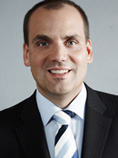 Johannes Muschik Johannes Muschik
Chairman of FECIF, Chairman of AFPA
New Chairman takes office
Back to my desk after our Annual General Meeting where I have been elected as Chairman for the period 2015/2016. The AGM was also an opportunity to exchange views on a number of hot topics concerning our industry...
>> CONTINUE READING
|
|
|
Editorial - March 2015
Jiří Šindelář
Chairman of USF CR / Member of the board of FECIF
Squaring the circle, or back to roots? A view of European regulatory turmoil from the former “Eastern Bloc”
When the Velvet revolution overthrew the Czech communist government in 1989, a crucial part of the change was the transition to liberal...
>> CONTINUE READING
|
|
|
Editorial - December 2014
 Graham Reid Graham Reid
Managing Director at Classic Financial Solutions CVBA
The true worth of an adviser
A few years ago one of our clients suffered a nervous breakdown. After early retirement he had continued working as a consultant from a small office at home, from where he also managed the family finances, something in which ...
>> CONTINUE READING
|
|
|
Editorial - July 2014
David CHARLET
ANACOFI
For my first editorial as President of FECIF, I would like to thank every member of the Board, the General Assembly and the Staff.
I would also express a special thought for Daniel Nicolaes, one of the best representatives of our profession in Europe, who disappeared a few months ago.
>> CONTINUE READING
|
|
|
|
|
|