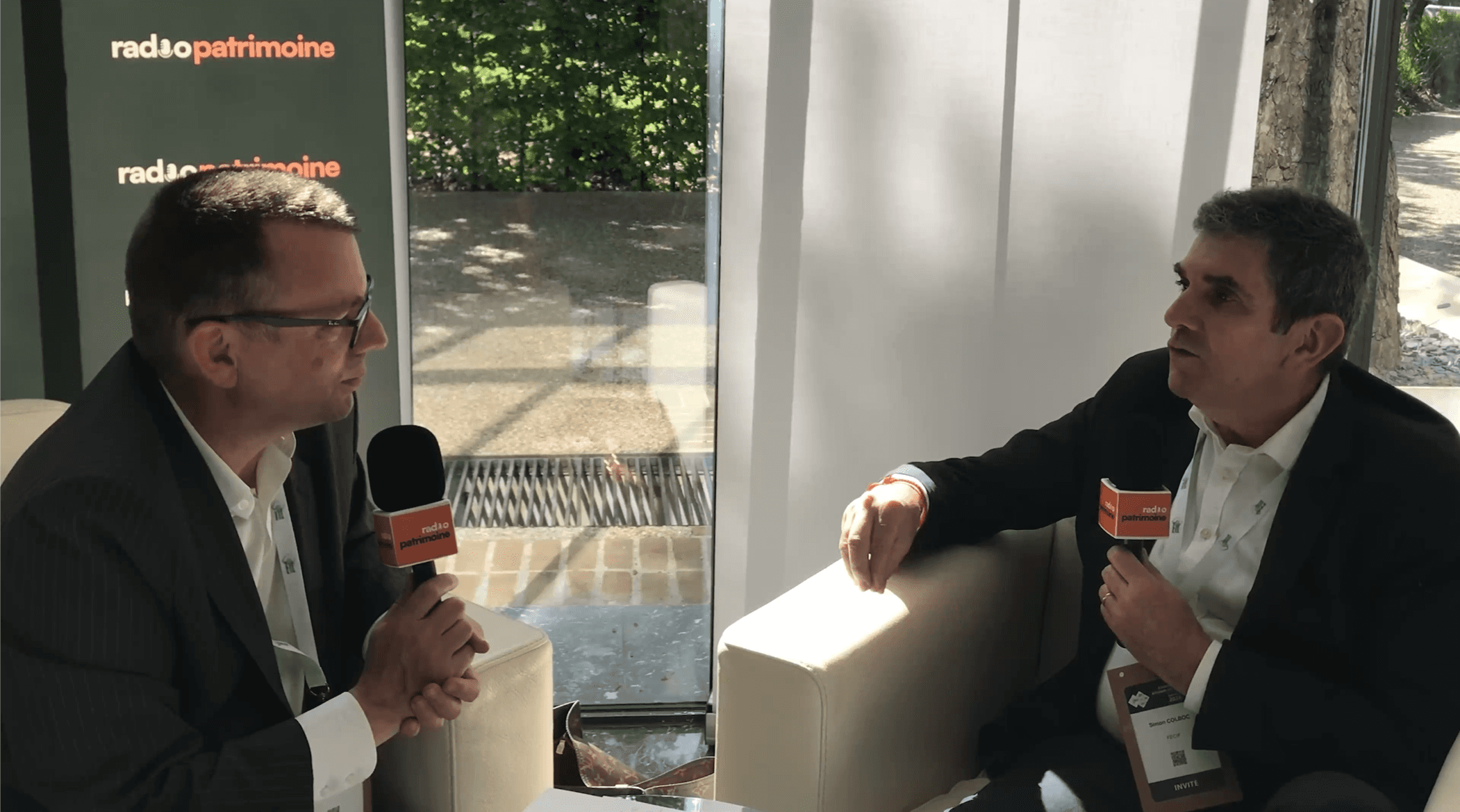
At the ANACOFI Convention 2026 in Paris, FECIF Secretary-General Simon Colboc spoke with Cédric Decoeur on Radio Patrimoine, offering a grounded perspective on Europe’s financial landscape and the role of financial advice.
🎥 Watch the full interview:
https://radio-patrimoine.fr/video/71773-Simon-COLBOC-FECIF
The conversation moved beyond the usual perception of Europe as a source of constraints and regulation. For FECIF, as Colboc underlined, Europe should first be seen as an opportunity — a large and diverse market where different national approaches can serve as a source of ideas and progress.
A central point of the interview was Europe’s paradox when it comes to savings. European households hold considerable financial wealth, estimated between €50 and €70 trillion, yet much of it remains underutilised from an investment perspective. The challenge is not a lack of capital, but how that capital is allocated.
As Colboc explained, while many citizens save for the long term, their investments often remain short-term and risk-averse. This creates a clear mismatch between financial objectives and investment behaviour, leading to a loss of potential over time.
In this context, financial advice plays a key role. Helping individuals align long-term goals with appropriate investment strategies is essential if Europe is to better mobilise its savings and support future economic needs, including the financing of major transitions.
The interview also shed light on the role of FECIF itself. As a European federation, FECIF acts as both a channel of information and a platform for coordination between national associations. It ensures that developments at EU level are shared across its network, while also bringing the voice of financial advisers into European consultations and policy discussions. Today, FECIF represents around 400,000 financial intermediaries across Europe, giving weight to its contribution in Brussels.
Looking ahead to 2026, Colboc highlighted technology and artificial intelligence as a key area of focus. While these tools offer clear opportunities, he stressed that they should enhance, not replace, human advice. The “augmented advisor” of tomorrow, combining expertise with technology, is likely to be even more effective. At the same time, maintaining the human dimension in financial decision-making remains essential.
The discussion offered a clear takeaway: Europe has the resources, but unlocking their full potential will depend on how effectively savings are channelled into long-term investment — and on the role financial advisers play in guiding that process.
Related Reads for You
Discover more articles that align with your interests and keep exploring.