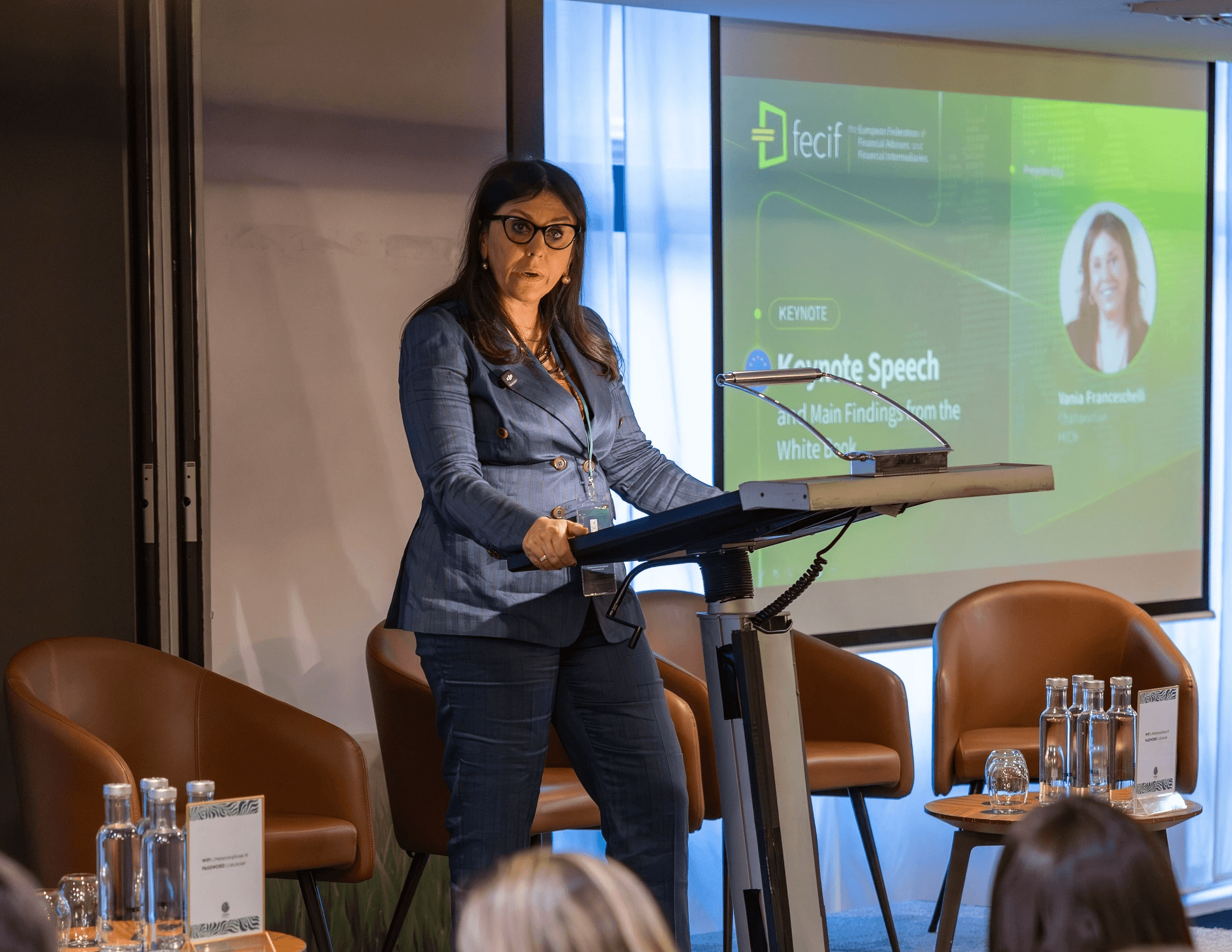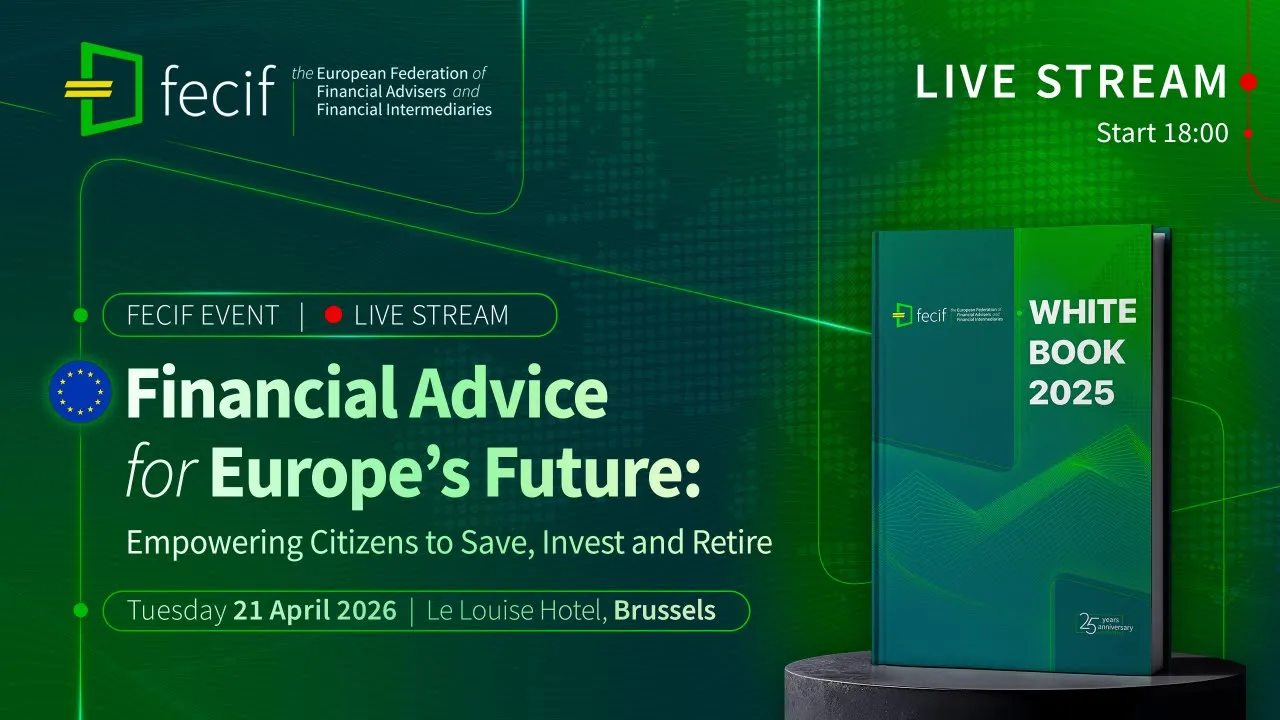
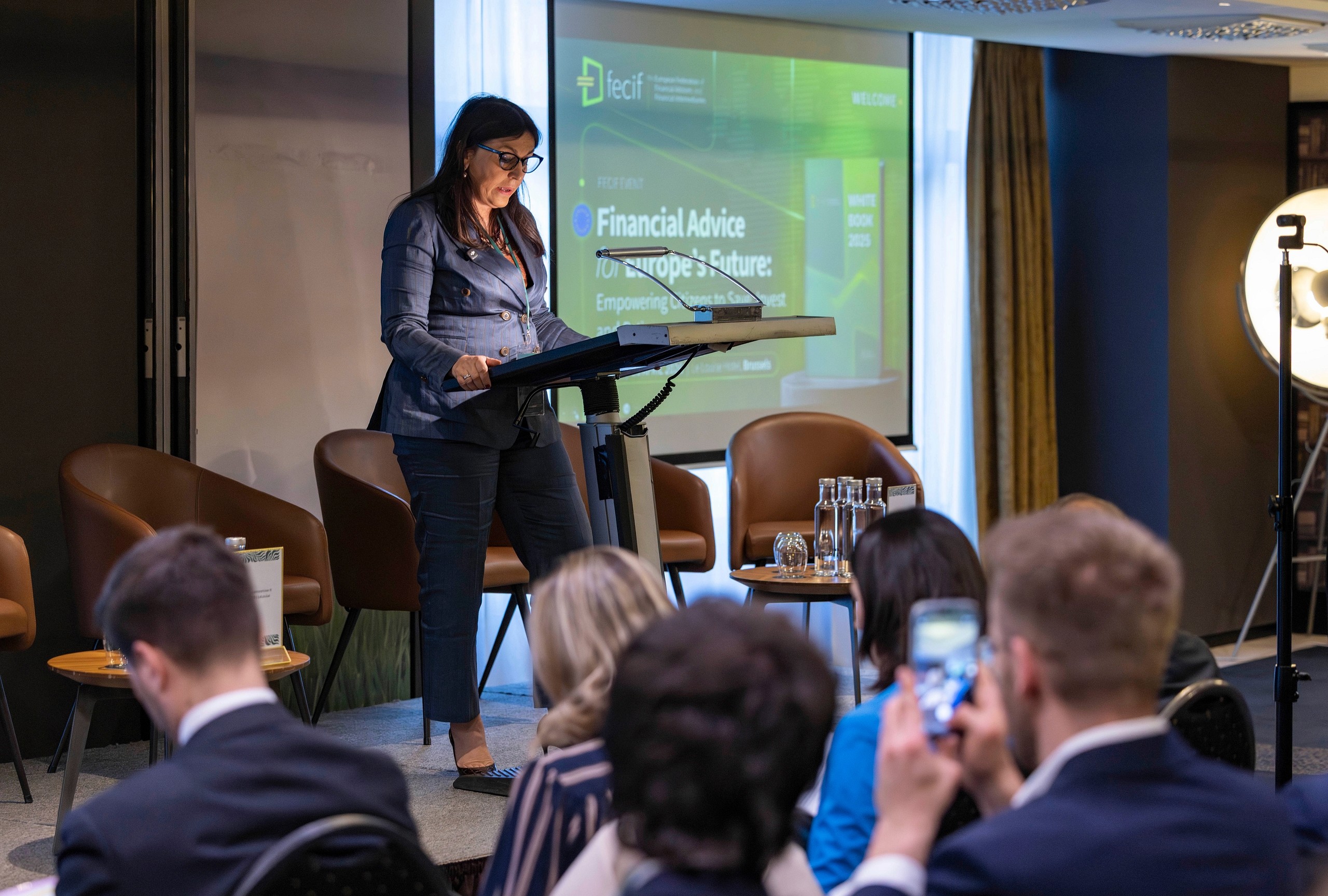
On 21 April 2026, FECIF hosted its special event in Brussels, “Financial Advice for Europe’s Future: Empowering Citizens to Save, Invest and Retire.” The discussion brought together representatives from EU institutions and leading financial sector organisations to explore how financial advice can support the objectives of the Savings and Investments Union (SIU).
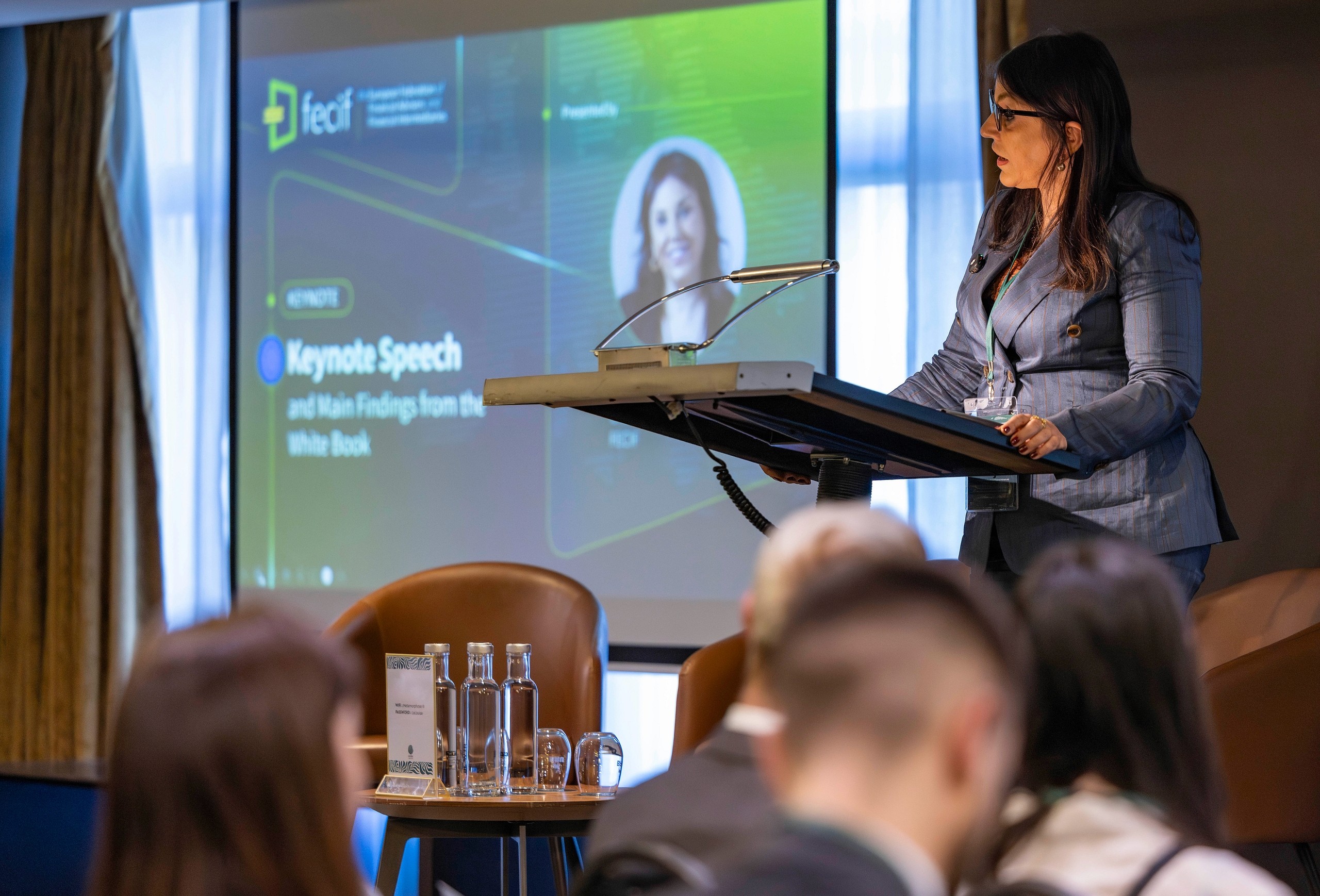
Opening the event, FECIF Chairwoman Vania Franceschelli underlined the growing importance of financial advice in today’s environment:
“Financial advice is not just a service. It’s a key driver of economic participation.”
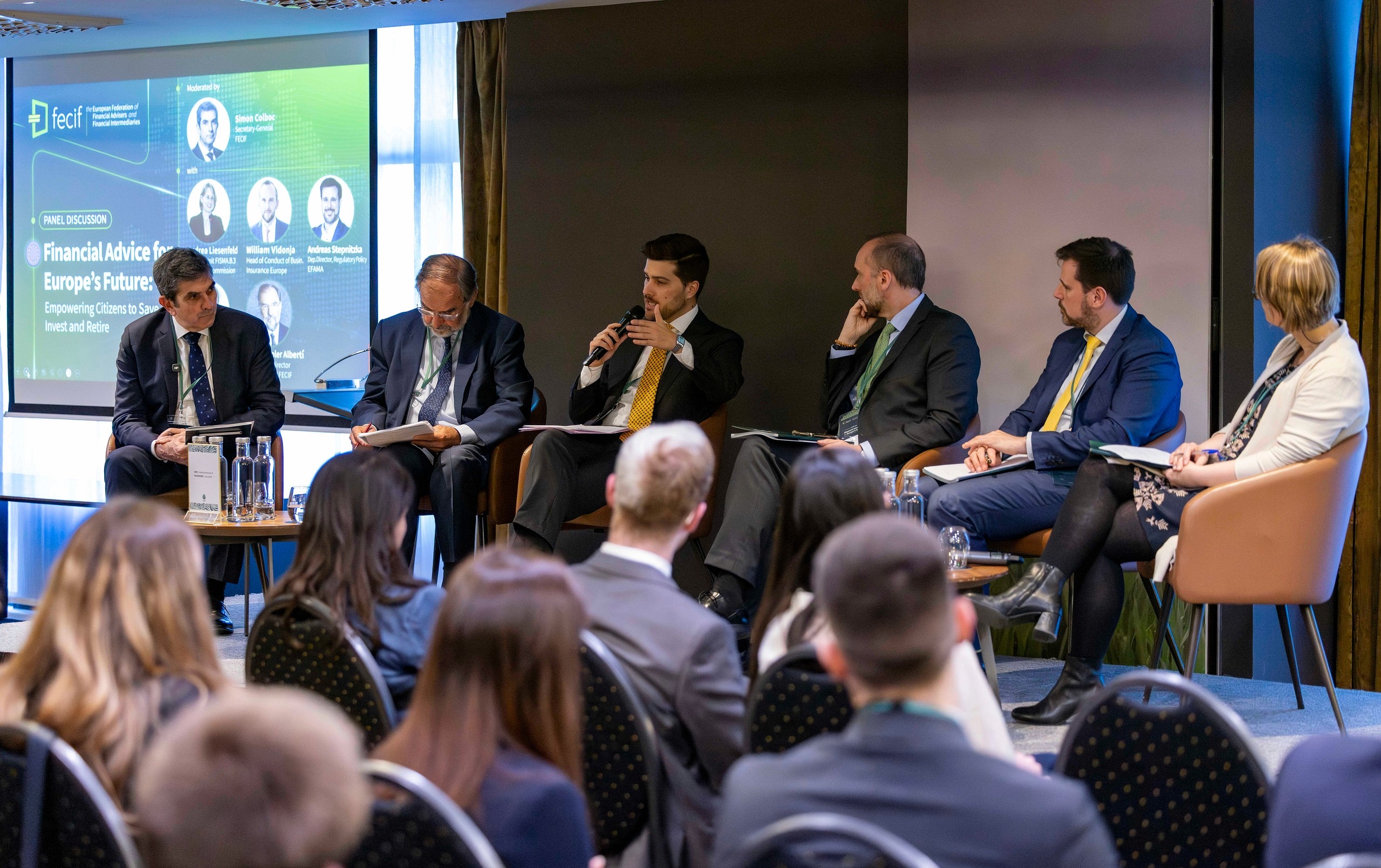
The panel, moderated by FECIF Secretary-General Simon Colboc, featured Andrea Liesenfeld (European Commission, Head of Unit FISMA.B.3), William Vidonja (Head of Conduct of Business, Insurance Europe), Jacopo Borgognone (Head of Capital Markets, European Banking Federation), Andreas Stepnitzka (Deputy Director Regulatory Policy, EFAMA), and Josep Soler Albertí (Executive Director, EFPA Spain).
From savings to investment
A central theme throughout the discussion was the gap between Europe’s strong savings base and its limited investment participation.
European households hold significant financial assets, yet a large share remains in low-risk, short-term instruments rather than being channelled into long-term investment. This disconnect is not simply about access to markets. It is about confidence, understanding, and decision-making.
Financial advice as a driver of participation
Across the panel, there was clear alignment on one point: financial advice plays a decisive role in turning savings into investment.
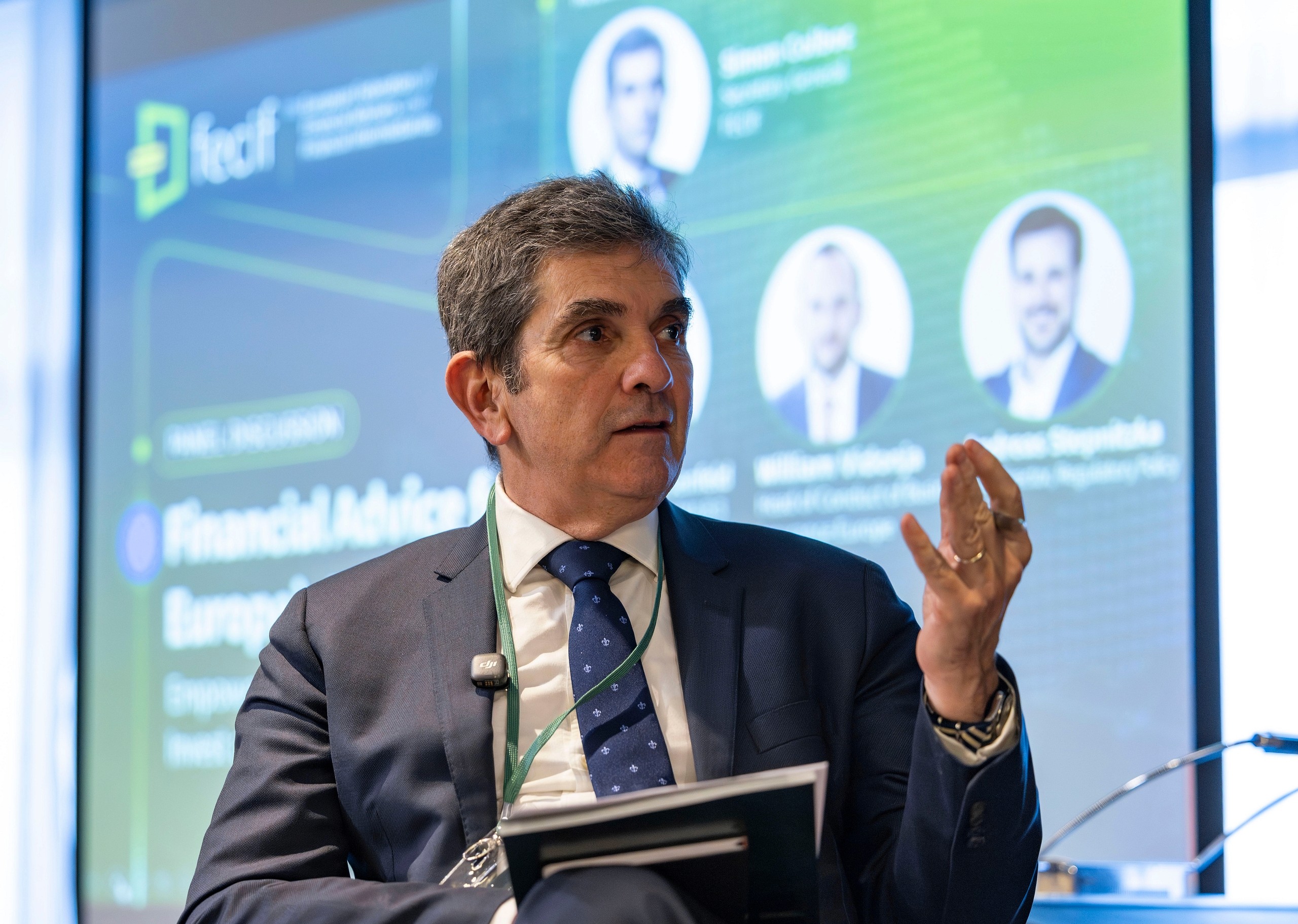
As highlighted during the discussion,
“Financial advice is not just a service. It’s a key driver of economic participation.”
William Vidonja stressed the practical challenge at the core of the debate. People are saving, but that is only part of the equation. The real question is how to ensure that part of those savings is invested in a way that supports both individual financial goals and broader economic growth.
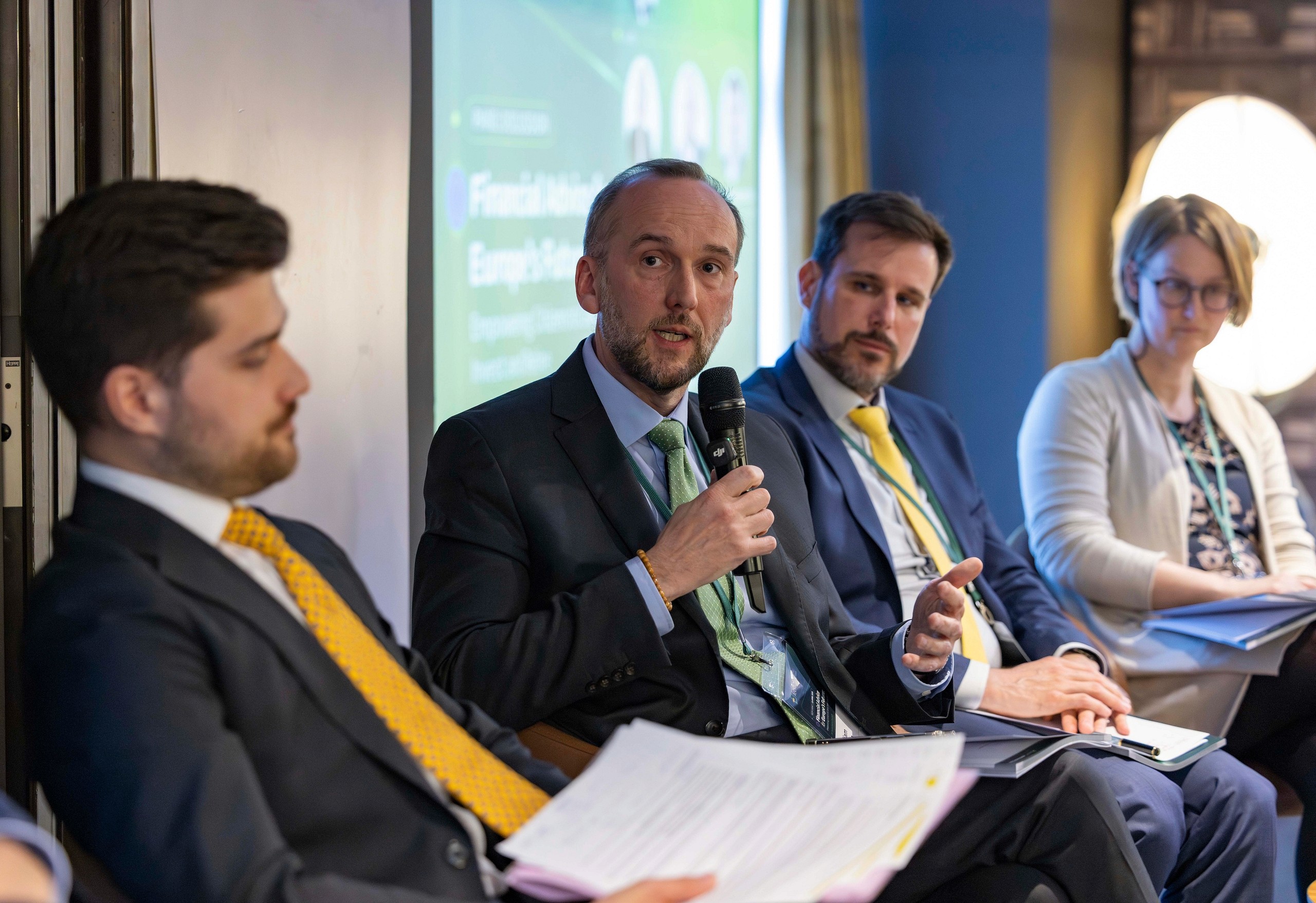
He also pointed to the tangible impact of advice. Individuals who receive professional guidance tend to build more wealth, prepare more effectively for retirement, and feel more confident about their financial future.
From diagnosis to action
While there was broad agreement on the challenges, several speakers noted that translating this shared understanding into action remains difficult.
Josep Soler Albertí put it plainly:
“We are in the continent of consensus on the diagnosis, but not on the solutions.”
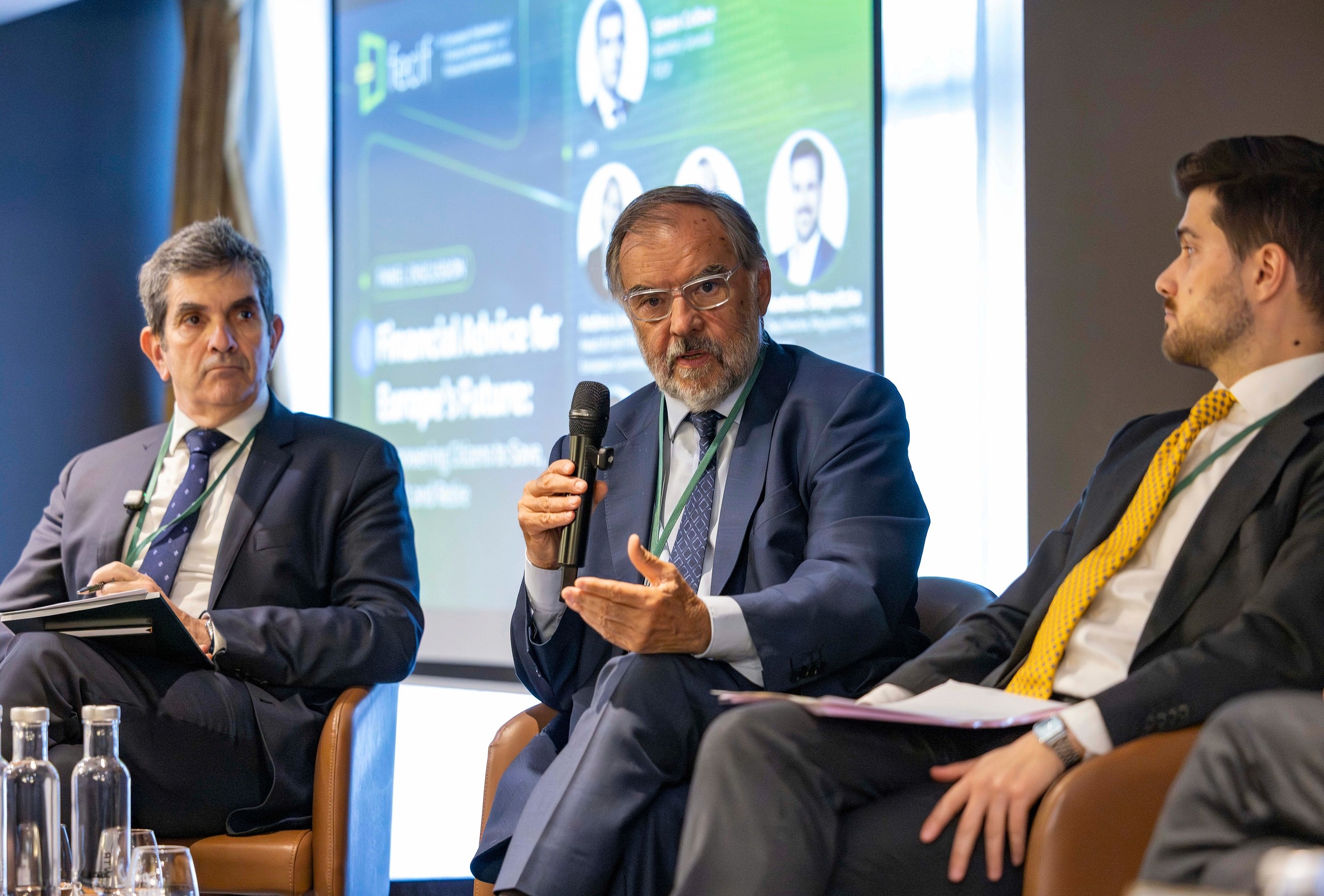
He also highlighted a structural issue. Encouraging citizens to move from saving to investing is challenging when public communication around pension sustainability remains limited. Without a clear message at policy level, the effort falls largely on advisers and the industry.
The role of financial literacy and advice
Financial literacy was widely recognised as part of the solution. Andrea Liesenfeld underlined that there is no single solution, noting that financial literacy, value for money, and access to advice must work together to support investor participation.
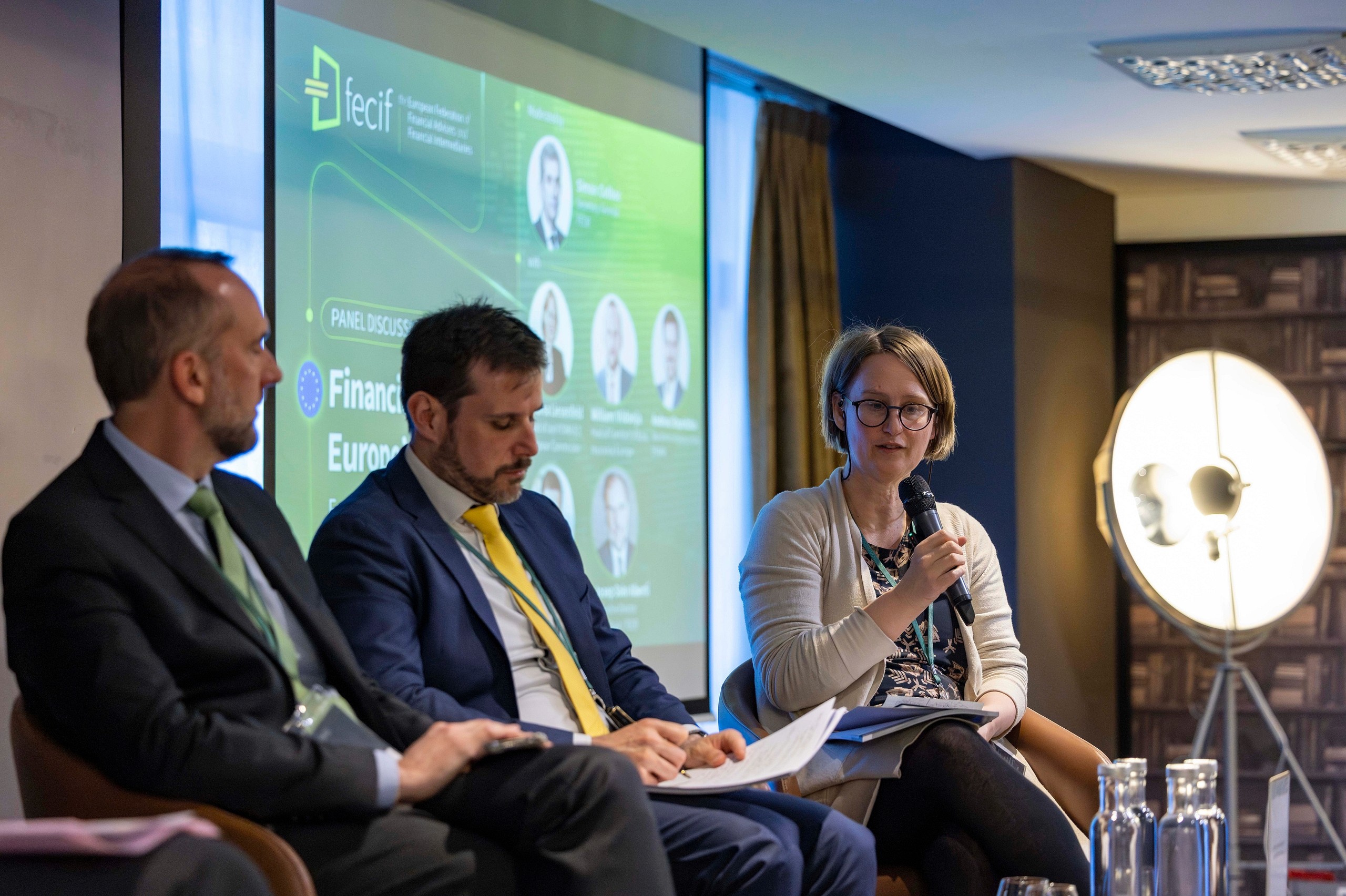
At the same time, it was acknowledged that education alone is not enough. As noted during the discussion, not everyone will become an investment expert, nor should they need to.
This is where financial advice becomes essential. It bridges the gap between information and action, helping individuals make decisions that are aligned with their long-term needs.
Technology: opportunity and limits
The discussion also addressed the growing influence of digital tools and artificial intelligence.
Technology is expanding access and reshaping how people engage with financial products. At the same time, it raises new questions. Increasingly, consumers turn to digital tools for what they perceive as financial advice, even when those tools operate outside any regulatory framework.
A hybrid model is emerging. People may start their journey online, but when decisions become more complex or consequential, they still look for human interaction and professional guidance.
A broader economic perspective
Beyond individual behaviour, the discussion pointed to a wider economic challenge.
As Jacopo Borgognone noted, the core issue lies in asset allocation, with a significant share of European savings still concentrated in low-risk assets that could be better directed towards long-term investment.
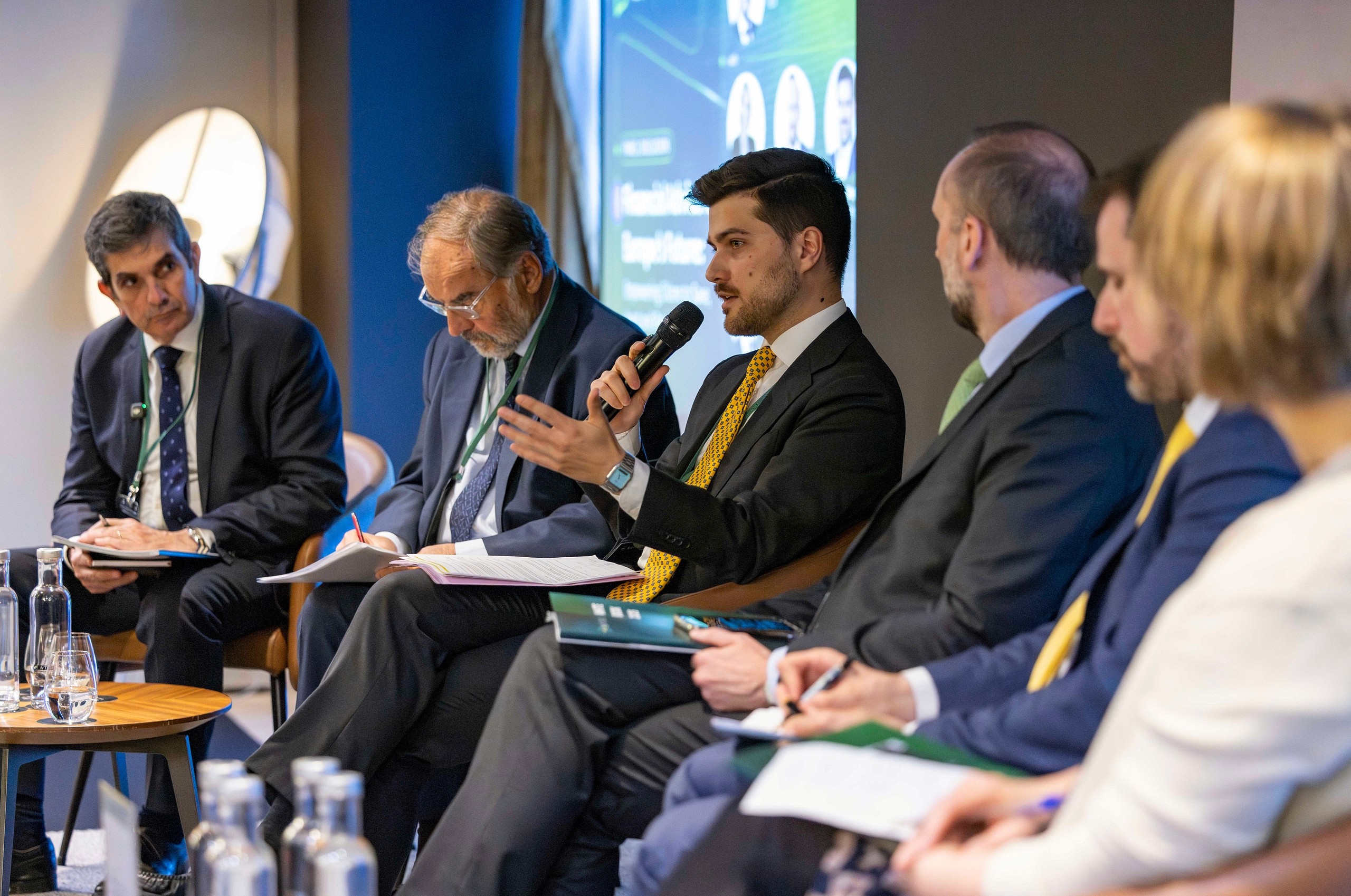
Europe does not lack savings. The challenge is how those savings are mobilised to support long-term growth, innovation, and the financing of key transitions. Financial advice plays a central role in this process by helping individuals navigate complexity and make informed choices.
A shared conclusion
The event confirmed a common understanding among participants. Unlocking Europe’s investment potential requires more than opening access to markets. It requires trust, guidance, and a system that helps translate policy into real decisions.
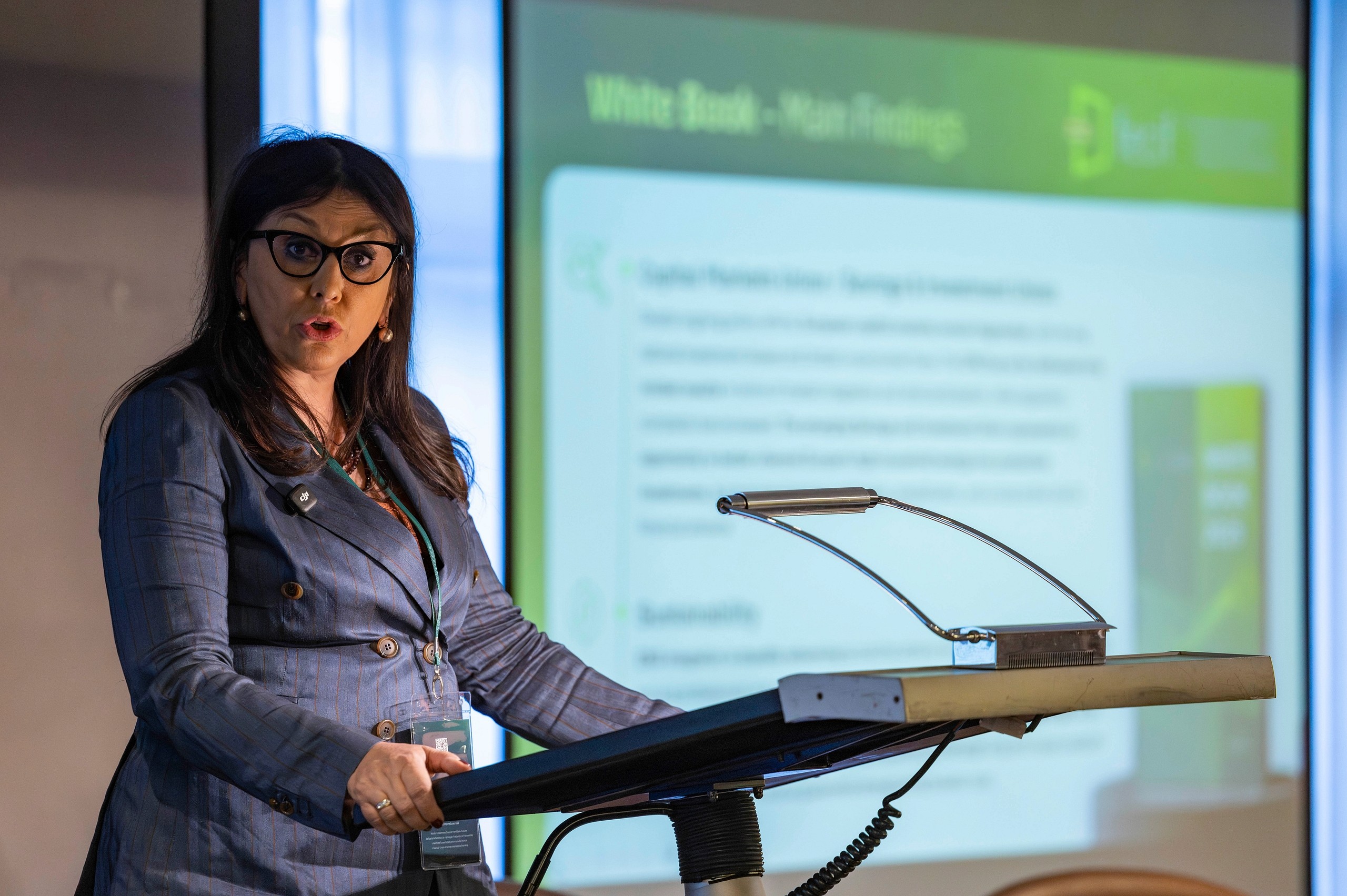
As FECIF Chairwoman Vania Franceschelli concluded:
“Tuesday’s event clearly highlighted the central role that financial advice plays in empowering EU citizens to make informed financial decisions. As the European Union advances its Savings and Investments Union agenda, ensuring access to high-quality professional advice, alongside stronger financial literacy, will be key to fostering trust, enhancing participation in capital markets, and supporting long-term financial resilience across Member States.”
FECIF would like to thank all speakers for their participation and contributions, in particular Andrea Liesenfeld, William Vidonja, Jacopo Borgognone, Andreas Stepnitzka and Josep Soler Albertí for a focused and forward-looking exchange.
———————
📷For photos from the event click here
Watch the full recording of the event here:
📷© Elio Germani 2026
Related Reads for You
Discover more articles that align with your interests and keep exploring.