“The adviser profession is consistently regulated but rarely recognised”
Stefka Topalova
EFPA General Manager


Financial Advice and Financial Education Must Advance Together
by Stefka Topalova, EFPA General Manager
The European policy agenda in financial services has rarely been this consequential. The Savings and Investments Union is taking shape, retail investor protections are being redesigned, and the question of whether ordinary citizens will participate meaningfully in capital markets is being answered in real time. It is in this context that FECIF and EFPA sent a joint letter to Commissioner Maria Luís Albuquerque in May, prompted by her speech in Helsinki on 10 April. The letter made a careful argument: financial education gives citizens the foundation to understand that financial decisions matter, but professional advice translates that understanding into personalised, suitable decisions. One cannot replace the other. The letter also flagged a concern regulators cannot afford to ignore: the proliferation of unregulated financial content creators reaching millions with advice they are not qualified to give. High-quality regulated advice is one of the most effective safeguards against this risk.
On 30 September 2025, the European Commission launched its EU Financial Literacy Strategy — a milestone FECIF strongly welcomes. Delivery has already begun: expert group meetings kicked off in Q1 2026, practitioner workshops are underway, and a pilot project was approved in the EU’s 2026 budget. A network of “financial literacy ambassadors” is being assembled, and by 2027 a new Eurobarometer will track progress. And yet the strategy faces a structural limit: under Article 165 of the TFEU, education policy is a Member State competence. The Commission cannot oblige ministries of education to update curricula or make financial education mandatory. The 2024 Council Conclusions advocated for exactly that — but a political recommendation is not a binding obligation. Civil society organisations — NGOs, professional associations, consumer bodies, industry federations — must build the structured, evidence-based case and carry it into national capitals and regional assemblies. And it is civic society — parents, teachers, local communities — who will create the political pressure that actually moves curricula. Both need to be part of this conversation, and the Commission should actively build a platform that brings them together in structured dialogue with national authorities. Let 2026 not be remembered as the year Europe talked about making financial literacy mandatory — but as the year we started making it happen, with a credible path to results by 2030.
The evidence from recent EU policy files reveals a persistent blind spot: the adviser profession is consistently regulated but rarely recognised. The Retail Investment Strategy — political agreement reached in December 2025 — strengthens obligations on advisers and preserves professional qualification standards. Welcome provisions. But the RIS nowhere frames the adviser as a strategic asset for retail participation, and is silent on advice access gaps. The EP’s INI report on financial literacy and finfluencers, voted in April 2026, follows the same pattern. Recital G notes that only 38% of EU citizens trust the investment advice they receive — framed as a problem, not as a call to invest in adviser quality and accessibility. The sole operative reference to regulated intermediaries appears as a compliance comparator for finfluencers: they already meet high protection standards, unlike unregulated content creators. The right conclusion is not only to tighten rules on finfluencers — it is also to recognise the regulated profession that already does what finfluencers cannot. ESMA’s March 2026 report on the retail investor journey comes closest, identifying the need for qualified advisers as part of the trust deficit discouraging retail participation. But even there, the follow-up is framed as regulatory simplification, not a policy commitment to the adviser’s public role.
This letter to Commissioner Albuquerque is part of a broader pattern of engagement. Over the past year, FECIF submitted formal responses to key European consultations, including:
European Commission: Public consultation on Savings and Investment Union (SIU) – link
ESMA: Call for evidence on retail investor journey as part of simplification and burden reduction efforts – link
European Commission: Public consultation on supplementary pensions – link
On 21 April, FECIF launched its White Book 2025 in Brussels at an event titled Financial Advice for Europe’s Future: Empowering Citizens to Save, Invest and Retire. As Chairperson Vania Franceschelli put it at the launch, the document exists to reaffirm the importance of the financial adviser’s role — for individual citizens and for Europe’s broader economic wellbeing. Its recommendations are concrete: official recognition of professional advice, smarter rules for digital finance, stronger financial education, greater gender inclusion, and a renewed focus on complementary retirement schemes.
In 2026, FECIF is strengthening its Brussels presence through in-person meetings with EU institutions and industry bodies. This June alone: MEPs involved in the PEPP Regulation and Supplementary Pensions Package, DG FISMA units responsible for SIU coordination, and counterparts including EFAMA, Insurance Europe and PensionsEurope. The message is consistent: access to qualified advice is essential for retirement planning, and any European initiative on supplementary pensions must respect national diversity and avoid one-size-fits-all approaches that have historically limited uptake.
Europe holds an estimated €50 to €70 trillion in household financial wealth, much of it sitting in low-yield instruments. The challenge is not a lack of capital — it is trust, guidance and the right conditions for long-term investment. FECIF — the only European organisation exclusively representing financial advisers and intermediaries at EU level, speaking for some 450,000 professionals — has been consistent: strong consumer protection, harmonised professional standards, and recognition of the adviser as a strategic asset. Not a compliance cost. A trusted professional whose work connects policy ambitions to citizens’ real financial lives.
The profession is ready. The policy moment is here. FECIF is engaged.
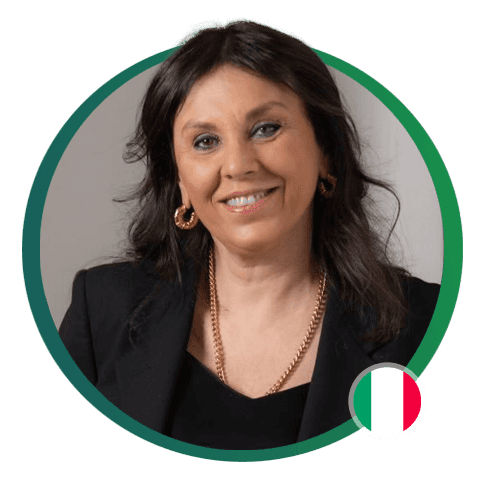
Stefka is General Manager of EFPA, the European Financial Planning Association, where she leads the organisation’s operational, strategic and stakeholder engagement activities. Since joining EFPA, she has played a key role in the association’s European advocacy, international expansion and cooperation with regulators, professional bodies and industry stakeholders. Her work focuses on advancing professional standards in financial advice, promoting financial literacy and supporting the development of trusted financial planning across Europe.
Past Editorials

Stefka Topalova,
EFPA General Manager
Editorial | June 2026
Financial Advice and Financial Education Must Advance Together
The European policy agenda in financial services has rarely been this consequential. The Savings and Investments Union is taking shape, retail investor protections are being redesigned, and…

Simon Colboc
FECIF Secretary-General
Editorial | May 2026
Europe Saves.
Europe Fails to Invest.
The Difference is Advice.
There is a particular kind of policy frustration that comes not from ignorance but from inaction — when everyone in the room agrees on the problem, the evidence is overwhelming, and still…

Michael Herzhofer
AFPA Chairman
Editorial | April 2026
Why tax incentives are the key to closing Europe’s growing pension protection gap
Across Europe—and especially in Austria—the demographic clock is ticking loudly. Societies are ageing at a pace that challenges the financial sustainability of national pension and…
Vania Franceschelli
FECIF Chairwoman
Editorial | March 2026
Financial Advice at the Heart of the Savings and Investment Union
As the European Union advances the Savings and Investment Union (SIU), one element remains central to its success: financial advice. Expanding citizens’ access to capital markets…
Simon Colboc
FECIF Secretary-General
Editorial | February 2026
The Sovereign Power of Savings: Europe's Overlooked Asset
When Canadian Prime Minister Mark Carney rose to address the World Economic Forum in Davos last month, the ensuing drama—his unflinching…

Vania Franceschelli
FECIF Chairperson
Editorial | January 2026
2026: A Busy, Defining Year for Europe’s Financial Services Agenda
As 2026 approaches, the European Union faces an exceptionally dense policy agenda in financial services. In the final weeks of 2025, the European Commission unveiled several…

Martin Klein
Vice Chairman of the FECIF Board
Editorial | December 2025
Reform of the pan-European pension product PEPP – disguised as something benign
The EU Commission has presented its draft amendment to Regulation (EU) 2019/1238 on a pan-European personal pension product (PEPP). Any reform project should start with…
Frank Rottenbacher
Board Member AfW & FECIF Board Director
Editorial | November 2025
Humans, Data and Trust – How AI Will Redefine Financial Advice
For many advisers, AI has already become part of everyday reality. Yet between hype and hesitation, one fact stands out: AI will not replace financial advisers – it will redefine their work…
Michael Herzhofer
AFPA Chairman
Editorial | September 2025
Ensuring fair access to Insurance and Financial Services for Seniors
As our society ages, we face a defining challenge: ensuring that the systems we build are inclusive and supportive for all citizens, especially those who have spent a lifetime contributing to our nation's prosperity…
Vania Franceschelli
FECIF Chairperson
Editorial | July 2025
Let Advisers Advise: Clearing the Path to a True Savings and Investments Union
Europe's financial advisers risk getting trapped in a regulatory maze that could stifle the competitiveness we desperately need. While the Commission's simplification…

David Charlet
ANACOFI President & FECIF Board Director
Editorial | June 2025
Simplification or Stagnation? The EU’s Regulatory Dilemma
All that for that result ? The European Union has finally realized that it's too cumbersome and not effective enough. It's analyzing and questioning…
Josep Soler-Albertí
EFPA Spain’s Executive Director
Editorial | May 2025
Trump Naked, Now What?
Barely three months have passed in his second term, yet it feels like years. With a compulsive media presence and dominating headlines through often…
Martin Klein
Vice Chairman of the FECIF Board
Editorial | April 2025
Between Intention and Reality: RIS and FIDA under Scrutiny
Those who wish to strengthen retail participation in capital markets must not build regulatory barriers to entry. Yet current developments in Brussels suggest a growing risk of precisely that. Two legislative initiatives are currently under…

St John Coombes
CIFSA
Editorial | March 2025
Trump V Europe an existential threat?
The theatre of Donald Trump has caused European leaders to review their current relationships both internally and externally. Whilst the focus to date has been on Global trade and Security the impact of Trump and his GOP allies has been dramatic and direct…

Cosima F. Barone
Board Member HUB+
Founder & CEO – FINARC SA
Editorial | February 2025
Deregulation in the USA: what about Europe?
As the world awakens to a new reality, i.e., the triumphant return of Donald Trump to the White House, the deregulation process has well begun in the United States. Here's an example of the potential application of an AML rule, brought…